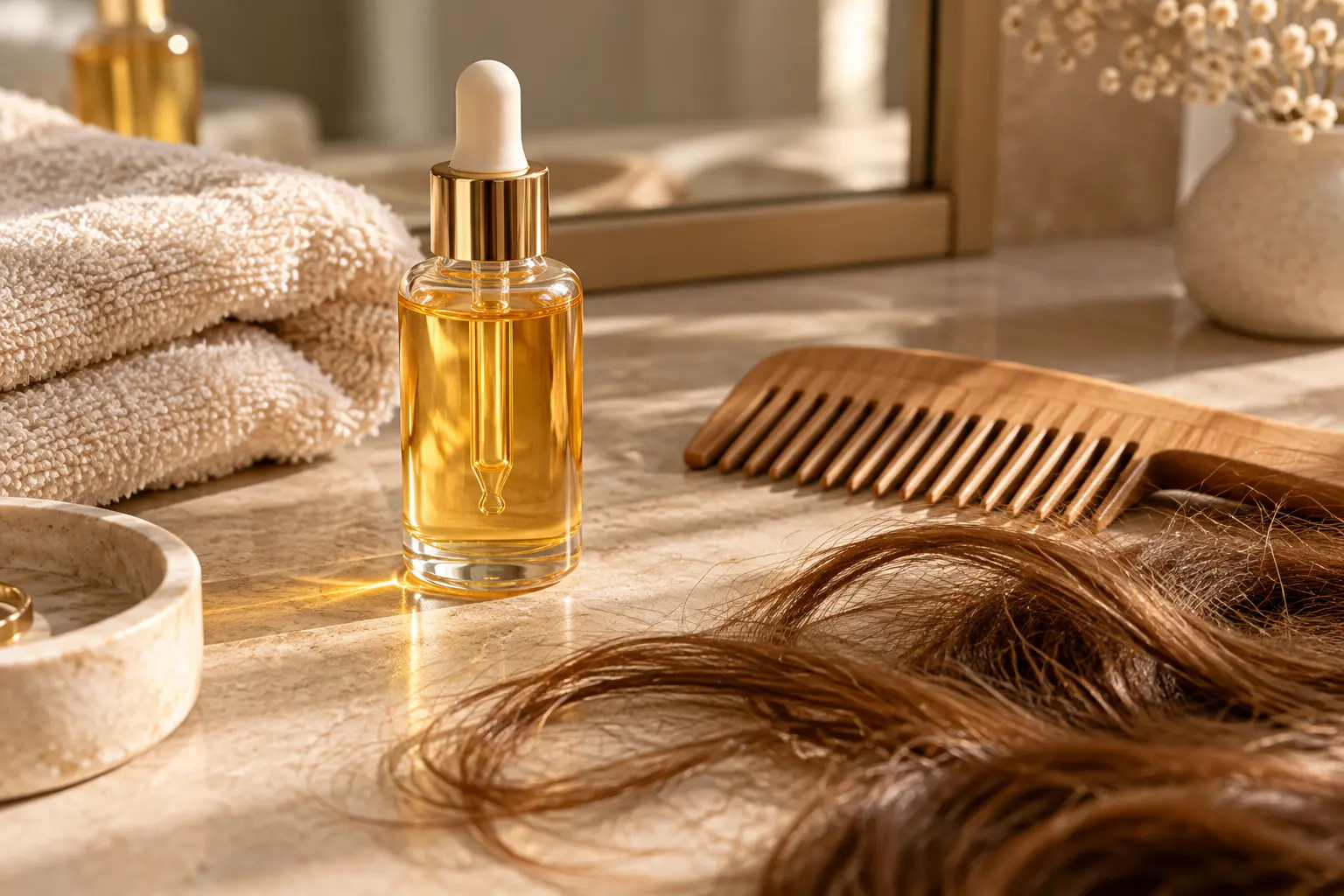
Vitamin C serums are popular morning products for brightness and antioxidant support. The best-known formulas combine 15% L-ascorbic acid with vitamin E and ferulic acid, a combination studied by researchers and widely copied. This guide explains how these serums work, how to spot a degraded serum, and how to use one comfortably. It is general information, not medical advice.

What L-ascorbic acid does
L-ascorbic acid is the pure form of vitamin C. In skincare, it is used as an antioxidant and for brightening uneven tone. When used with daily sunscreen, antioxidants may help support the skin against environmental stress. Sunscreen remains the main protection.
Why vitamin E and ferulic acid are added
Research associated with Duke University explored combining L-ascorbic acid with vitamin E (tocopherol) and ferulic acid. The combination was found to improve stability and antioxidant performance compared with vitamin C alone. Many brands now use similar formulas.
pH and concentration
L-ascorbic acid is most stable and penetrates best at a low pH, often around 3.5 or below. Low pH can also make serums sting. Common concentrations range from 10 to 20 percent:
- 10% may suit sensitive skin or beginners.
- 15% is a common balance.
- 20% is stronger and more likely to irritate, without necessarily better results.
Signs of oxidation
Vitamin C serums break down with air, light, and heat. Watch for:
- color changing from clear or pale yellow to dark orange or brown,
- a change in smell,
- reduced effect.
Slight yellowing is common over time. A dark brown serum should be replaced.
Packaging and storage
- Choose opaque or dark glass bottles.
- Keep the cap tightly closed.
- Store in a cool place, away from sun and steam.
- Some people store vitamin C serums in the refrigerator.
- Use within the time the brand recommends after opening.
How to use
- Cleanse and dry your face.
- Apply a few drops in the morning.
- Follow with moisturizer.
- Finish with broad-spectrum sunscreen.
Start every other day if your skin is sensitive. Avoid layering with strong acids at the same time.
Possible side effects
- Stinging or tingling, especially on sensitive skin.
- Temporary redness.
- Rarely, yellowish staining on skin from oxidized serum.
Stop using if irritation persists.
Alternatives
If L-ascorbic acid irritates you, consider derivatives such as sodium ascorbyl phosphate, magnesium ascorbyl phosphate, or tetrahexyldecyl ascorbate. They are usually gentler, though evidence and potency vary.
Quick checklist
- Look for L-ascorbic acid with vitamin E and ferulic acid.
- Choose a concentration based on sensitivity.
- Check packaging and storage.
- Replace oxidized serums.
- Use in the morning under sunscreen.
- Patch test first.
FAQ
Can I use vitamin C at night? Yes, but many people prefer mornings, when antioxidant support pairs with sunscreen.
Can I use vitamin C with niacinamide? Many people use both without problems. If you notice flushing, apply them at different times.
Why does my vitamin C serum sting? Low pH can sting. Try a lower concentration or a gentler derivative.