The right hair serum for dry frizzy hair should make the lengths easier to manage without leaving the roots greasy, the ends stiff, or the style dependent on a large amount of product. “Serum” describes a format more than a single formula. Some products are silicone-rich, some are oil blends, and others are lightweight liquids with film-forming ingredients. Their behavior depends on hair texture, porosity, humidity, washing routine, and the amount applied.
This guide explains how to compare a serum by slip, weight, ingredient structure, use on wet or dry hair, heat claims, packaging, and removal. It does not promise to repair damaged fiber or predict personal compatibility. Check the current ingredient list, directions, warnings, and retailer terms before purchasing.
This article contains affiliate links. If you use one and complete an eligible purchase, Last Meadow Guide may earn a commission at no extra cost to you. The retailer controls current price, stock, and policies. Confirm those details on the destination page before ordering.
Hair serum for dry frizzy hair: the short answer
A useful serum reduces friction and improves the appearance of the surface without making the hair feel coated. Silicone-based formulas can provide slip and a smoother feel, while oils can add lubrication and shine. Neither category is automatically better. A formula that feels light on coarse, porous hair may overwhelm fine hair, and a formula that controls flyaways in dry weather may feel insufficient in humidity.
Start with the result you need: easier detangling, less visible frizz, softer ends, shine, or protection during styling. Then choose where the product will be applied. Most serums are intended for mid-lengths and ends rather than the scalp. Product directions and your hair’s response should determine the amount.
Understand what the formula can and cannot do
Hair fiber is not living tissue, so a serum can improve surface feel and appearance without permanently repairing structural damage. Film-forming ingredients can reduce friction and help the cuticle lie more smoothly. Oils can lubricate and change shine. These effects can be useful and visible, but they should not be confused with rebuilding a split end or reversing chemical damage.
Read the full ingredient list instead of selecting by a single marketing word. Silicones may appear under several names and can offer different levels of slip, volatility, and buildup behavior. Oils vary in weight and fatty-acid profile. Fragrance and essential oils matter if your scalp or skin is sensitive. The U.S. Food and Drug Administration’s cosmetics information provides general labeling and safety context; the individual product directions remain the relevant use instruction.
Match weight to hair density and texture
Fine hair often needs a small amount of a lightweight formula applied below the ears. Thick, coarse, curly, or highly porous hair may tolerate more product and may benefit from a richer texture on the ends. These are starting points, not rules. Density, curl pattern, damage, and humidity change the result.
Use the smallest amount that spreads across the target section. Warm it between the palms, then press or smooth it through the lengths. Applying a full dropper to the whole head can create uneven saturation. If the hair looks flat or oily, reduce the amount and move the application farther from the roots. If the ends remain rough, add a tiny amount only to those areas.
Decide whether to use it on wet or dry hair
Applying serum to damp hair can improve combing and help distribute a thin layer before drying. The hair should be damp rather than dripping, unless the product specifically says otherwise. Use a wide-tooth comb or the tool recommended for your texture, starting at the ends and moving upward to reduce pulling.
Applying serum to dry hair is useful for finishing, smoothing flyaways, and adding a controlled amount of shine. Start with less than you would use on wet hair because the product remains concentrated on the surface. Do not keep adding layers to solve frizz if the result is becoming heavy. Refresh with a small amount on the visible ends and outer layer.
Consider humidity and styling heat
Frizz can come from moisture entering the fiber, surface damage, friction, static, or a curl pattern losing definition. A serum may help with some of these factors, but a product cannot make every humidity condition behave the same. Look for clear directions about humidity or heat rather than treating “anti-frizz” as a universal promise.
Heat-protection claims should be read carefully. Confirm the temperatures, tools, and application instructions stated by the maker. A serum that improves shine is not automatically a heat protectant. Use styling tools at a sensible setting for the hair and follow the product directions. Keep flammable or alcohol-rich products away from an active heat source until the hair is ready for styling.
Apply by sections, not by habit
Divide the hair into manageable sections when the texture is dense or curly. Apply a small amount from the mid-lengths toward the ends, then add only where the surface still feels rough. Keep the palms light around the crown and hairline unless the product is specifically designed for those areas. Roots usually need less oil and can reveal buildup quickly.
For wavy or curly hair, scrunch or smooth according to the routine that preserves the pattern. Brushing after the hair is dry can increase visible frizz for some textures. For straight hair, a flat palm can polish the surface without creating a greasy stripe. The method should follow the desired finish rather than a universal technique.
Check buildup, washing, and compatibility
A serum may not be a problem simply because it contains silicone or oil, but repeated layers can change how the hair feels. Watch for dullness, reduced volume, a coated surface, or products that no longer distribute evenly. These signs can also come from conditioner, hard water, or styling products, so change one variable at a time.
Use a cleansing routine that matches the product and your hair. Do not scrub aggressively to remove a coating. If a formula feels difficult to wash out, reduce the amount before escalating the cleanser. Keep the bottle closed, away from heat and direct sunlight, and follow the period-after-opening or manufacturer guidance.
Packaging, scent, and sensitive skin
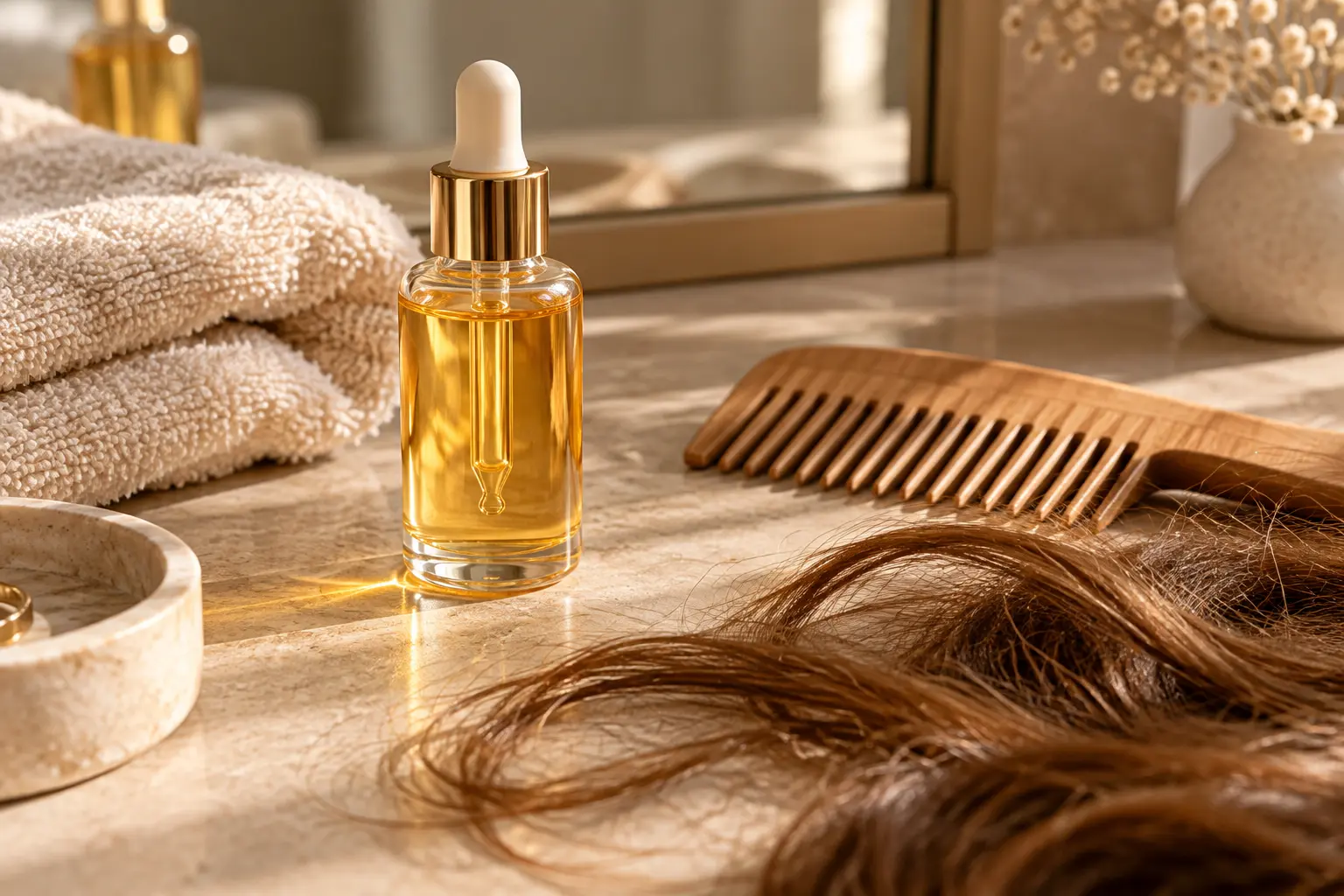
Dropper bottles, pumps, and narrow nozzles control the amount differently. A pump can be easier to use with one hand, while a dropper can deliver a tiny amount but may encourage over-dispensing. Check the seal and packaging on arrival. Changes in smell, color, or texture should prompt a review of the product rather than continued use.
Fragrance can be part of the experience and a source of irritation for some users. Read the ingredient list if you know your sensitivities, and keep the product away from the eyes. Patch-test as directed and stop using a product that causes a concerning reaction. A cosmetic serum does not need to be placed on the scalp unless the product is specifically formulated and labeled for that use.
Delivery, returns, and the final test
Before buying, confirm the bottle size, ingredient list, intended application, heat or humidity claims, scent information, packaging, current availability, and returns. Keep the packaging and order details until the product has been used in the ordinary routine. Cosmetic returns can have specific hygiene restrictions, so read the current terms before opening.
The best hair serum for dry frizzy hair is the one that gives the needed slip and surface control at a small dose, matches the hair’s density, and fits the washing and styling routine. Choose formula by result, apply from the lengths down, and verify the current directions before using heat. A serum can make hair easier to manage; it should not be treated as proof that damage has been repaired.
Frequently asked questions
Should serum go on wet or dry hair?
Either can work when the product directions allow it. Damp hair can help distribution and detangling; dry hair can benefit from a small finishing amount. Use less on dry hair and keep it away from the roots unless instructed otherwise.
Can hair serum repair split ends?
It can temporarily smooth the appearance and reduce friction, but it cannot permanently fuse a split end. The visible result should be evaluated as surface control rather than structural repair.
How much serum should I use?
Start with the smallest amount that spreads through the mid-lengths and ends. Hair density, length, texture, and porosity determine the actual amount. Add only where the surface remains rough.
Does every anti-frizz serum protect from heat?
No. Read the exact heat-protection claim, temperature range, and directions. A glossy or smoothing finish does not by itself establish heat protection.