The best blush for mature skin should add color without emphasizing texture, settling into lines, or creating a finish that feels disconnected from the rest of the complexion. That does not mean every mature complexion needs a cream formula or a dewy finish. Skin changes with age, climate, skincare, sunscreen, and makeup habits, so the useful comparison is about texture and control rather than a single category label.
This guide explains how to compare cream, liquid, balm, and powder blush by pigment, finish, application, shade, wear, and removal. It does not claim that one formula works for every person or treat makeup as skincare. Check the current ingredient list, directions, shade information, and retailer return terms before ordering.
This article contains affiliate links. If you use one and complete an eligible purchase, Last Meadow Guide may earn a commission at no extra cost to you. The retailer controls current price, stock, shade availability, and policies. Verify those details on the destination page before buying.
Blush for mature skin: the short answer
A thin, controllable formula with a satin or softly luminous finish is often a useful starting point because it can add color without requiring a thick layer. That description still leaves several questions unanswered. A cream blush may blend comfortably and move if the base underneath remains very emollient. A powder blush may offer easier placement and longer control, yet a very dry or heavily textured formula can look obvious on the surface.
The best choice depends on the base, the amount of color wanted, and the way the product will be applied. Look for a shade that can be built in small increments, a texture that does not drag, and packaging that allows a clean tool. The phrase “for mature skin” is a marketing description rather than a technical performance standard.
Choose formula by the base underneath
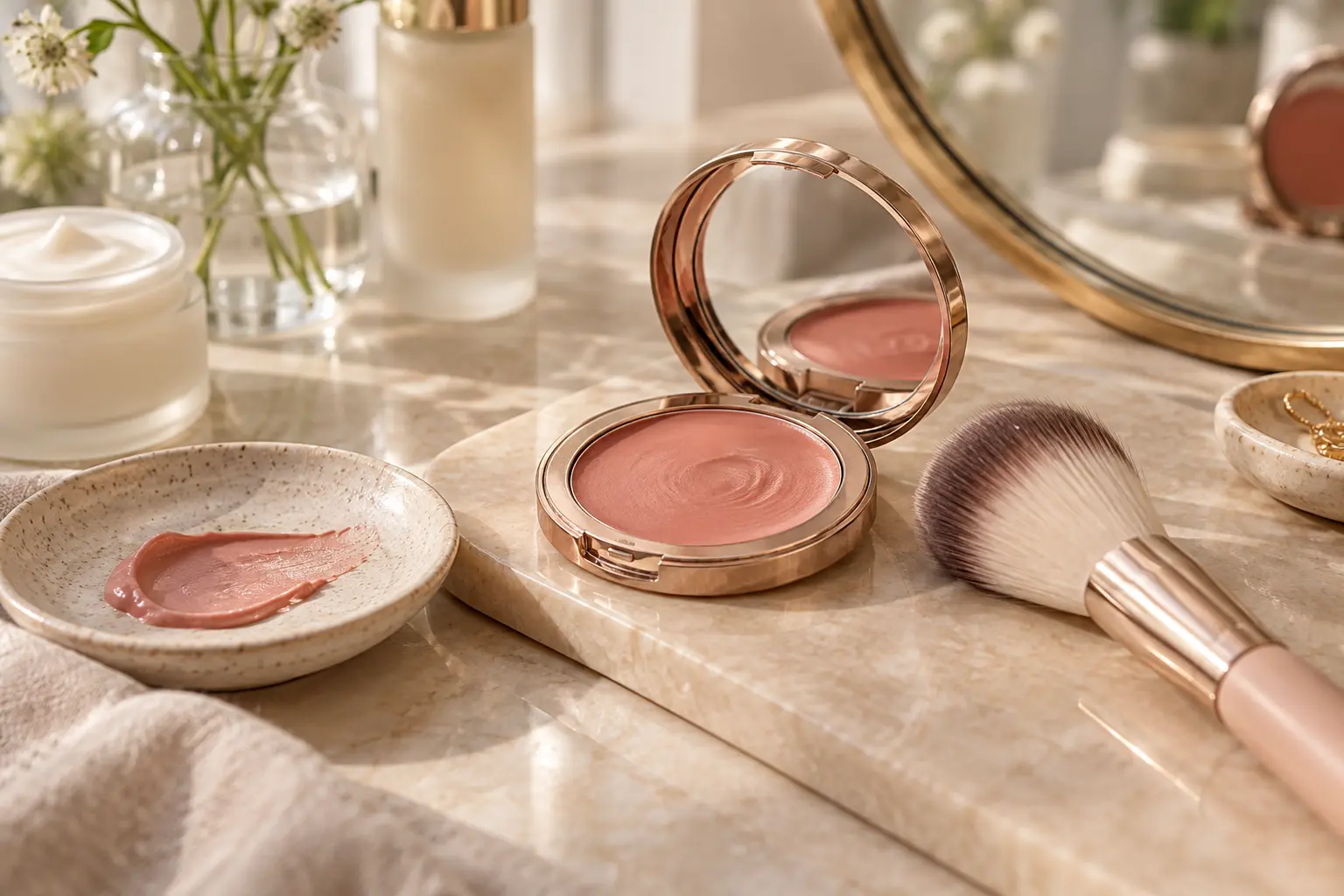
Cream and balm blushes work well when the complexion remains slightly flexible. They can be pressed onto foundation or tinted moisturizer with fingers, a sponge, or a synthetic brush. Use a small amount first because a rich formula can disturb layers underneath if it is rubbed repeatedly. The product should spread without requiring pressure across areas that feel dry or delicate.
Liquid blushes vary from watery stains to high-pigment drops. A stain can become difficult to move once it sets, while a fluid product may blend beautifully when used quickly and sparingly. Read the directions and test the timing on a small area. Do not assume that a thin-looking liquid is low pigment.
Powder blush can be practical when the complexion is set or when the user wants a predictable tool-based application. Compare the powder texture, surface finish, and pigment concentration. A finely milled powder may be easy to diffuse, but a very flat matte can emphasize dryness. A shimmer-heavy powder can highlight texture and may be less forgiving around the upper cheek.
Separate finish from hydration claims
Finish describes how the product reflects light; it does not describe whether the skin is hydrated or healthier. Matte, satin, natural, luminous, and dewy can mean different things across brands. Inspect several swatches and look for the product on skin with visible texture, not only on a polished studio model.
A soft satin finish can bridge a natural base and a more polished eye look. A subtle glow may be useful on the upper cheek, while visible glitter can make pores or lines more noticeable under direct light. If a product contains skincare ingredients, evaluate that information separately from the cosmetic finish. The U.S. Food and Drug Administration’s cosmetics guidance is a reference for general cosmetic labeling and safety questions; it cannot predict personal compatibility.
Look for controllable pigment
Pigment strength is not the same as quality. A highly pigmented blush can be efficient when the user can pick up a tiny amount and distribute it evenly. It can also become difficult to correct if the formula sets quickly or the shade is much deeper than expected. A buildable product gives more room to adjust the color for daytime, evening, and different foundation depths.
Check whether the product is described as sheer, buildable, medium, or full impact, then look for swatches that show one layer and additional layers. For a cream, consider the amount that transfers from a fingertip or brush. For powder, tap off excess and use a clean brush. The useful test is control at the first application, not the intensity of the pan.
Choose shade by undertone and placement
Blush color interacts with foundation, bronzer, lipstick, and natural redness. Peach and coral can add warmth, rose and mauve can create a cooler effect, and berry or terracotta shades can be striking when applied lightly. Undertone matters more than a shade name because “pink” or “nude” does not describe the same color across brands.
Placement changes the result as much as color. Applying blush higher on the cheek can create a lifted visual direction; placing it more centrally can look youthful or flushed; sweeping it toward the temple can connect it with bronzer. There is no universal correct placement. Use the structure and movement of your own face, then check the result in ordinary daylight.
Prepare the skin in thin layers
Makeup cannot fix a base that is pilling, overly wet, or irritated. Apply skincare and sunscreen according to their directions, then allow the layers to settle before adding complexion products. If the base remains tacky, a powder formula may catch; if it is heavily powdered, a cream may lift the surface. Change one variable at a time when troubleshooting.
Keep richer moisturizer on areas that need it instead of applying the same amount everywhere. If the blush skips, use less product and press it onto the skin rather than rubbing. If it disappears, consider whether the foundation underneath is emollient, whether the blush is compatible, and whether a thin setting layer would improve control.
Apply without pulling the surface
Fingers warm a cream and can create a sheer veil when the product is tapped. A dense synthetic brush can place pigment precisely, while a soft sponge can soften the edges. The tool should let you control pressure. Press, stipple, or lightly sweep according to the formula’s directions; repeated rubbing can move the base and make the result patchy.
Start away from the strongest point of color and build toward it. If the blush is too strong, use the remaining foundation on the brush or a clean sponge to soften the edge. Do not add powder over a wet patch simply to hide it. Let each layer settle before deciding whether more color is needed.
Check ingredients, packaging, and freshness
Read the complete ingredient list if you know you react to fragrance, essential oils, preservatives, or particular pigments. “Clean,” “natural,” and “hypoallergenic” are not universal guarantees. Patch-test according to the product directions and stop using a product that causes a concerning reaction. Keep the original packaging so the batch or shade information remains available.
Packaging affects how cleanly the product can be used. A compact with a secure lid protects powder from contamination; a pot or tube needs a clean tool and careful closure. Check the period-after-opening symbol or manufacturer guidance. Changes in smell, color, texture, or separation are reasons to stop and review the product rather than trying to revive it.
Wear, touch-ups, and removal
Wear depends on skin oils, humidity, rubbing, base products, shade depth, and the amount applied. A long-wear claim does not mean the same result through every day. Blotting can reduce shine without adding more product, while a small touch-up may restore color after meals or outdoor activity. Carry a clean tool if the formula needs blending.
Remove blush with a method appropriate to the rest of the complexion. A light powder may release with a gentle cleanser, while a stain or long-wear base may need an appropriate first cleansing step. Avoid aggressive rubbing around the eyes and cheek. Clean brushes and sponges according to their material and the maker’s directions.
Final checklist
Before ordering blush for mature skin, check formula type, pigment control, finish, shade undertone, swatches, application method, base compatibility, ingredient list, packaging, period-after-opening guidance, current shade availability, and returns. Compare the product in daylight and use a small amount first. A comfortable makeup routine is built from proportion and technique, not from a label promising a particular age group.
The best blush for mature skin adds color with a thin, controllable layer and leaves the finish consistent with the rest of the face. Choose formula around the base, shade around undertone, and application around the texture you want to preserve. Verify current product details on the retailer or manufacturer page before buying.
Frequently asked questions
Is cream blush better for mature skin?
Not automatically. Cream can blend softly, while powder can provide easier control. The base underneath, formula texture, and amount applied matter more than the category name.
Is shimmer blush a bad choice?
No. Fine, restrained luminosity can be attractive. Large reflective particles can emphasize texture under direct light, so swatch the product and inspect it in daylight.
Where should blush be placed?
Placement depends on face structure, natural redness, and the desired effect. Start with a small amount on the upper cheek and adjust the direction after checking the result from several angles.
How should a new blush be tested?
Check the shade on clean skin or over the intended base in a small area, follow the product directions, and keep the packaging until the color and comfort are confirmed.