Dry, chapped lips are common in cold weather, heated rooms, and after time in the sun. Lip oils have become a popular fix because they feel light and add a soft shine. But not every oil does the same job, and some lip products contain ingredients that make dryness worse. This guide explains the best oils for lips, how they work, and how to build a simple routine. It is general information, not medical advice.
Why lips dry out so easily
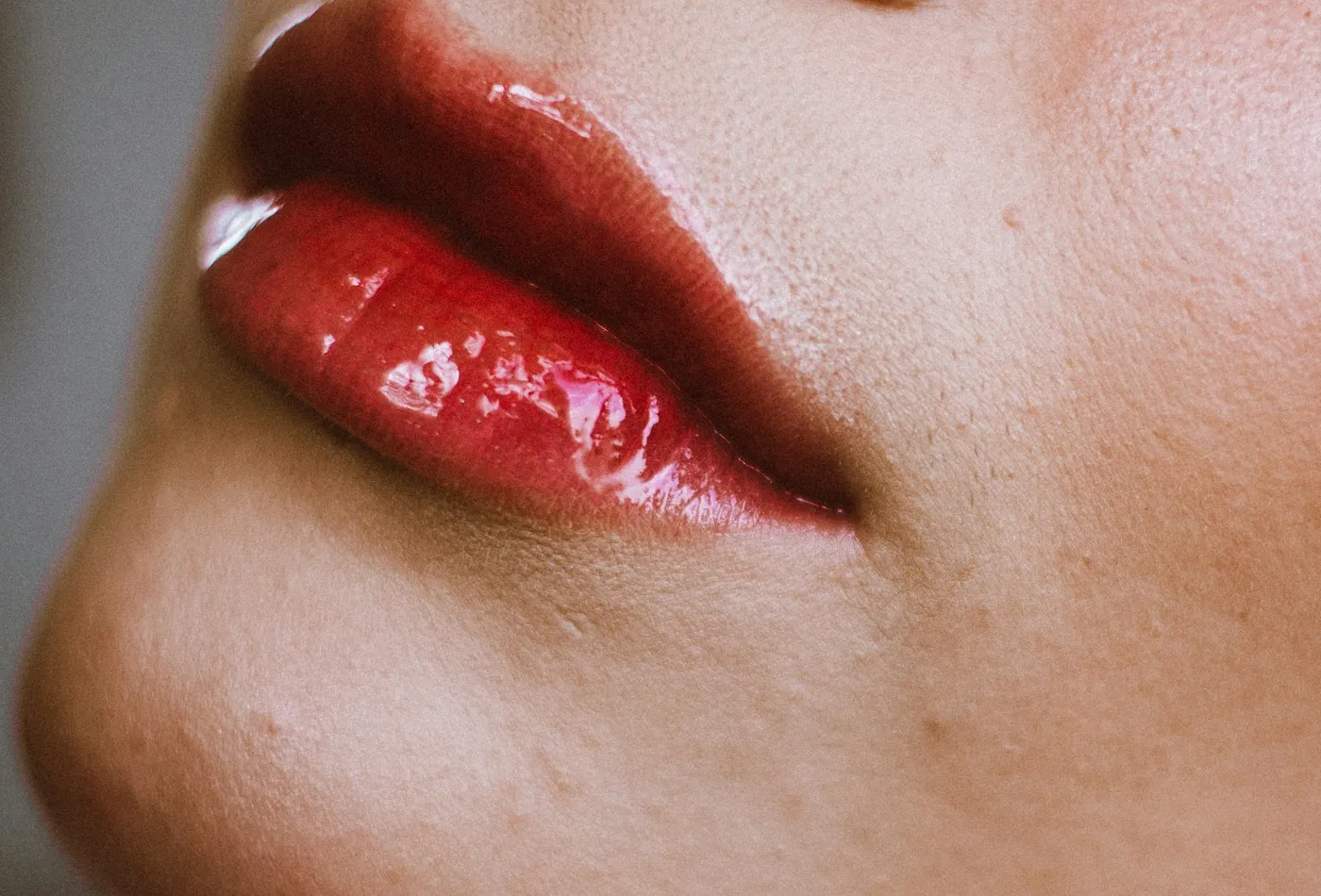
The skin on your lips is thinner than the skin on your face and has no oil glands. That means lips cannot make their own protective oils and lose moisture quickly to wind, cold air, dry indoor heating, and sun.
Habits play a role too. Licking your lips feels soothing for a moment, but saliva evaporates fast and can leave lips drier than before. Breathing through your mouth at night, some medications, and dehydration can also contribute.
Because lips cannot protect themselves, they rely on what you put on them. That is where oils and balms come in.
How oils help, and where they fall short
Oils are emollients. They soften the surface of the lips and smooth flaky skin. Many people like lip oils because they feel lighter than thick balms and give a natural shine.
On their own, most oils do not seal moisture in very well. For that, you need occlusive ingredients, such as petrolatum, beeswax, or rich butters, that form a protective layer on top. The most effective lip routines usually combine both: an oil to soften, and an occlusive to hold moisture in.
That is why many lip oils sold today are blends that include waxes or butters, and why a basic balm at night often works better than oil alone.
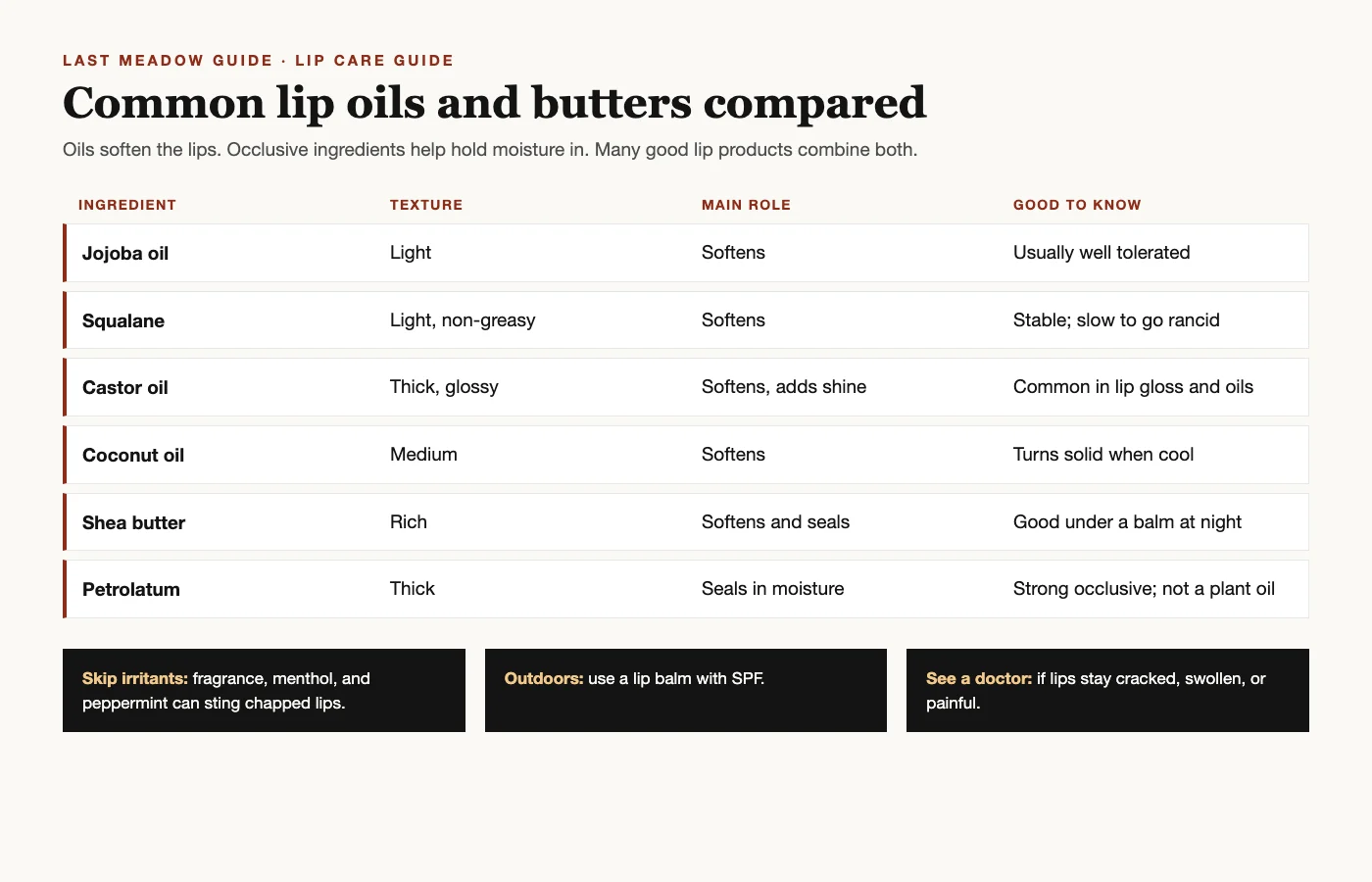
The best oils for lips
Jojoba oil. Technically a liquid wax, jojoba is light, absorbs well, and is usually well tolerated. It suits daytime use and people who dislike heavy textures.
Squalane. A stable, lightweight oil that does not feel greasy. Squalane is often made from sugarcane or olives and resists going rancid, so products keep longer after opening.
Castor oil. Thick and glossy, castor oil is a staple in lip glosses and lip oils because it adds shine and cushion. Some people find it sticky on its own, so it often appears in blends.
Coconut oil. A familiar household option that softens lips and feels comforting. It becomes solid in cool rooms and may feel greasy, but it works well for many people as a simple, low-cost choice.
Sunflower and sweet almond oils. Both are gentle emollients common in lip care blends. Skip sweet almond oil if you have a tree nut allergy.
Shea butter. Not an oil but a rich butter, shea both softens and helps seal. It works especially well at night under or within a balm.
For most people, the best oil for lips is a light emollient such as jojoba or squalane during the day, paired with a sealing balm at night.
What to avoid on chapped lips
Some popular ingredients can sting or irritate lips that are already dry or cracked:
- Fragrance and flavor oils. These are common causes of irritation and allergic reactions.
- Menthol, camphor, and peppermint. They create a cooling tingle that can feel good, but they may irritate and dry lips over time.
- Cinnamon and citrus oils. Often used for plumping effects, these can sting and inflame sensitive lips.
- Salicylic acid and strong exfoliants. These can be too harsh on cracked skin.
If your lips feel worse after using a product, stop using it. A product that tingles is not necessarily working harder.
How to use lip oil effectively
- Apply to clean, slightly damp lips. Oils spread more evenly and feel more comfortable on lips that are not completely dry.
- Use a thin layer. A small amount is enough. Too much can feel slippery and transfer onto cups.
- Seal at night. Before bed, apply a thicker balm or ointment over or instead of the oil.
- Reapply after eating and drinking. Lip products wear off quickly.
Gentle exfoliation can help with flaking, but only when lips are not cracked. A soft washcloth after a shower is usually enough; harsh lip scrubs can make things worse.
Lip care in the sun
Lips can burn just like the rest of your face, and they are easy to forget. Oils with shine can even increase sun exposure slightly by making lips more reflective. When you are outdoors, use a lip balm with broad-spectrum SPF, and reapply it regularly, especially after eating, drinking, or swimming.
Daytime and nighttime routine
Daytime: a light oil such as jojoba or squalane for softness, or a tinted lip oil if you want color. Switch to an SPF lip balm when you will be in the sun.
Nighttime: a thicker balm with shea butter, beeswax, or petrolatum. If you like, apply a few drops of oil first, then seal it in.
In very dry rooms: a humidifier in the bedroom can help lips and skin overnight.
Choosing a lip oil product
When comparing lip oils, read the ingredient list:
- Look for oils such as jojoba, squalane, sunflower, or castor near the top of the list.
- Check for butters or waxes if you want longer-lasting moisture.
- Avoid fragrance, flavors, and cooling agents if your lips are sensitive.
- Note the packaging. Doe-foot applicators are convenient but can collect bacteria; wipe them occasionally and replace products after the recommended period after opening.
Tinted lip oils can be a good bridge between care and color, but they may contain fragrance or flavors, so check the label.
When to see a doctor
Most chapped lips improve with simple care within a week or two. See a doctor or dermatologist if your lips stay cracked or painful, bleed, swell, develop sores, or if you notice a persistent patch that does not heal. Ongoing irritation can be a sign of an allergy to a lip product, a skin condition, or another health issue.
Lip oil vs lip gloss vs lip balm
The three products look similar but behave differently.
Lip oil is mostly oils, sometimes with a little tint. It softens and adds a glassy shine, and it usually wears off within an hour or two.
Lip gloss focuses on shine and color. Many glosses contain film-forming ingredients that sit on the surface and can feel sticky. Some glosses include caring oils, but their main job is appearance.
Lip balm contains waxes, butters, or petrolatum that form a longer-lasting protective layer. Balms are the best choice for repairing very dry or chapped lips, especially overnight.
If your lips are healthy and you want shine, a lip oil is a pleasant everyday choice. If your lips are chapped, start with a simple balm and add oil once they feel comfortable again.
Simple habits that make lip oils work better
Drink enough water through the day, since dehydration shows quickly on the lips. Avoid licking or biting your lips, which removes protection and irritates the skin.
In winter, cover your mouth with a scarf outdoors to block wind. At home, keep a lip product by the bed and near where you work so reapplying becomes a habit rather than an afterthought.
Best oils for lips FAQ
Are lip oils better than lip balms? They do different jobs. Oils soften and add shine; balms with waxes or petrolatum seal moisture in. Many people use oil by day and balm at night.
Is coconut oil good for lips? Yes, for many people. It softens and soothes. If it feels too greasy, try jojoba or squalane.
Can I use olive oil on my lips? It can soften lips in a pinch, but it may feel heavy. Lip-specific products tend to feel more comfortable.
Why do my lips feel drier after using a lip product? Fragrance, flavors, menthol, or other irritants may be the cause. Switch to a simple, fragrance-free product.
How often should I apply lip oil? As often as needed, especially after eating and drinking. At night, seal with a balm.
Final checklist
- Choose a light emollient oil such as jojoba or squalane for daytime.
- Seal with a balm containing shea, beeswax, or petrolatum at night.
- Avoid fragrance, flavors, menthol, camphor, and peppermint if lips are irritated.
- Use SPF lip balm outdoors.
- Stop using products that sting, and see a doctor if dryness persists.
For broader barrier support on the rest of your face, see our guide to ceramide barrier creams.