A suit for travel or warm weather needs to breathe, recover from creasing, and keep its shape after a day in a suitcase. Cloth choice makes the biggest difference. This guide explains Super numbers, high-twist yarns, and open weaves like fresco, and how to pick a suit that holds up on the road.
What Super numbers mean
Super numbers (such as Super 110s or Super 150s) describe how fine the wool fibers are. Higher numbers mean finer fibers, which feel softer and drape smoothly.
Finer is not always better for daily wear:
- Very fine cloths can crease more easily and wear faster at elbows and seat.
- Mid-range numbers (around Super 100s to 130s) are often more durable for frequent use.
Use Super numbers as one clue, not a ranking.
High-twist yarns
Yarn twist affects how cloth recovers. High-twist yarns are spun tightly, which makes them springy. Cloth woven from them tends to:
- bounce back from creases,
- feel crisp and dry against the skin,
- resist wear.
Many travel suits use high-twist wool for these reasons.
Fresco and open weaves
Fresco is a well-known open-weave cloth made from high-twist yarns, often in two- or three-ply. The open weave lets air pass through, which helps in hot weather, while the twist helps it shed wrinkles. It can feel slightly rough at first.
Other warm-weather options include tropical wools, mohair blends, and wool-linen blends. Linen breathes well but wrinkles easily.
Fabric weight
For travel and warm climates, lighter cloth weights feel cooler. Very light cloth can lose structure, so many people choose a light-to-mid weight high-twist wool as an all-season compromise.
Construction
- Canvassed or half-canvassed jackets shape to the body and recover well after packing.
- Fused jackets are lighter and cheaper, but heavy creasing or steam can sometimes affect the fused layer.
- Unstructured or lightly lined jackets breathe better in heat.
Ask about construction when the listing does not say.
Fit for travel
- Leave enough room to sit and lift your arms without pulling.
- Trousers with a little extra ease avoid strain on long flights.
- Consider a slightly darker color, which hides wrinkles and stains.
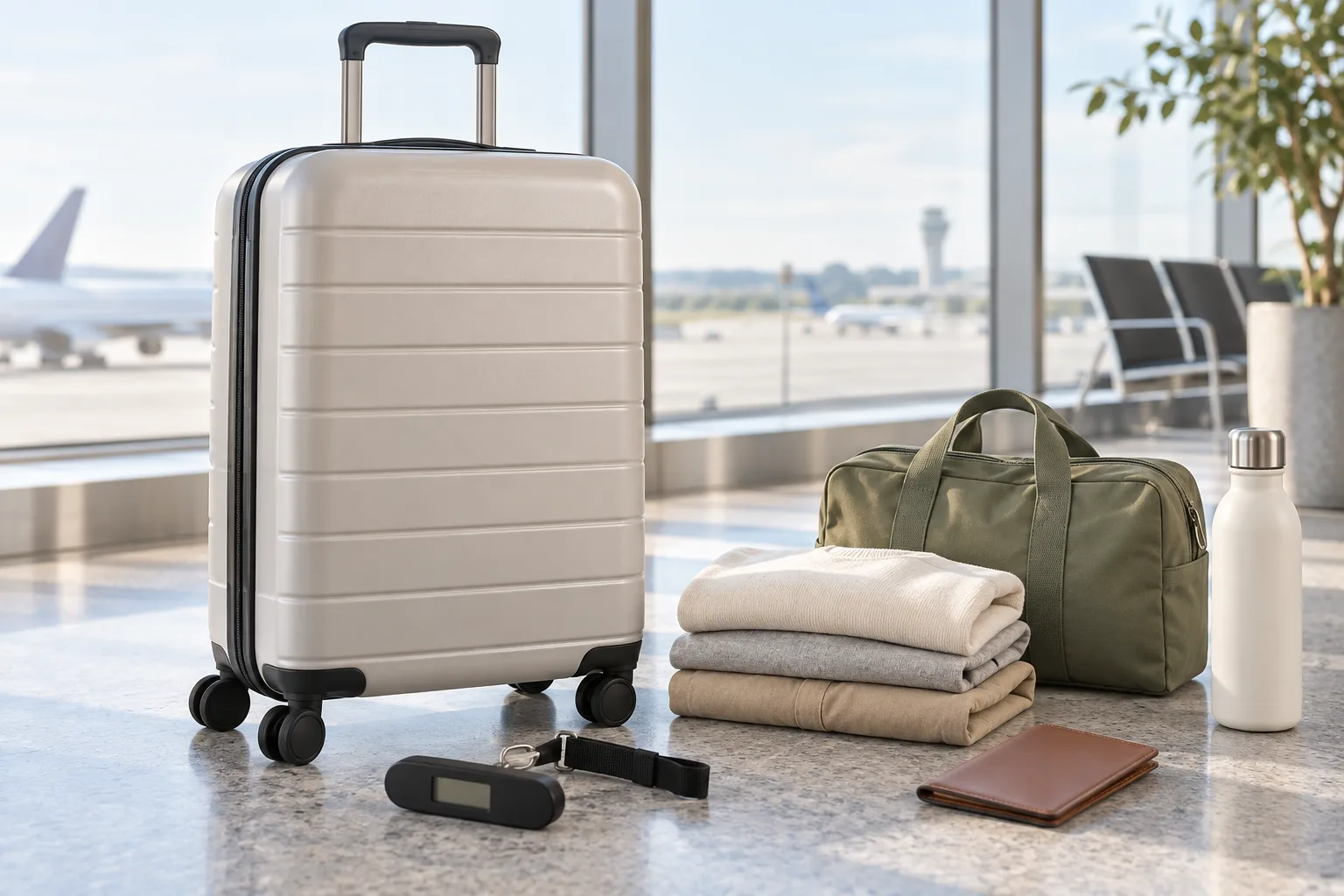
Packing a suit
- Turn the jacket inside out at the shoulders, tucking one shoulder into the other.
- Fold it gently in half and place it on top of soft items.
- Fold trousers along the crease and lay them flat.
- Hang the suit as soon as you arrive. Let it rest overnight or use steam in the bathroom.
A garment bag also works well for short trips.
Care
- Brush the suit after wear.
- Rest it a day between wears.
- Press lightly with a cloth or steamer.
- Dry clean only when needed.
Quick checklist
- Choose high-twist or fresco cloth for travel.
- Treat very high Super numbers with caution for daily wear.
- Pick a weight that matches your climate.
- Check jacket construction.
- Try a fit with room for sitting and movement.
- Plan packing and care.
FAQ
Is fresco comfortable? It can feel crisp at first. Many wearers find it softens slightly and appreciate its breathability.
Will a travel suit stay wrinkle-free? High-twist cloth recovers better, but no suit is completely wrinkle-proof. Hanging it after travel helps.
Can I wear a fresco suit year-round? In mild climates, yes. In cold winters, a heavier cloth is more comfortable.