Searching for a Rujo boot usually means you are already looking at a western silhouette and now need to decide whether a particular pair fits your foot, wardrobe, and expectations for maintenance. The product photograph can show the colour and broad shape. It cannot tell you whether the instep is comfortable, whether the shaft works with your jeans, or what the construction terms mean when the sole eventually needs attention.
This guide uses the construction and policy information published by RUJO as a starting point, then turns it into a practical comparison checklist. It does not claim a personal wear test, a fabricated customer story, or a universal rating. Confirm the exact model details, stock, price, size guidance, and current return terms on the official product page before ordering.
This article contains affiliate links. If you purchase through a link on this page, Last Meadow Guide may earn a commission at no extra cost to you.
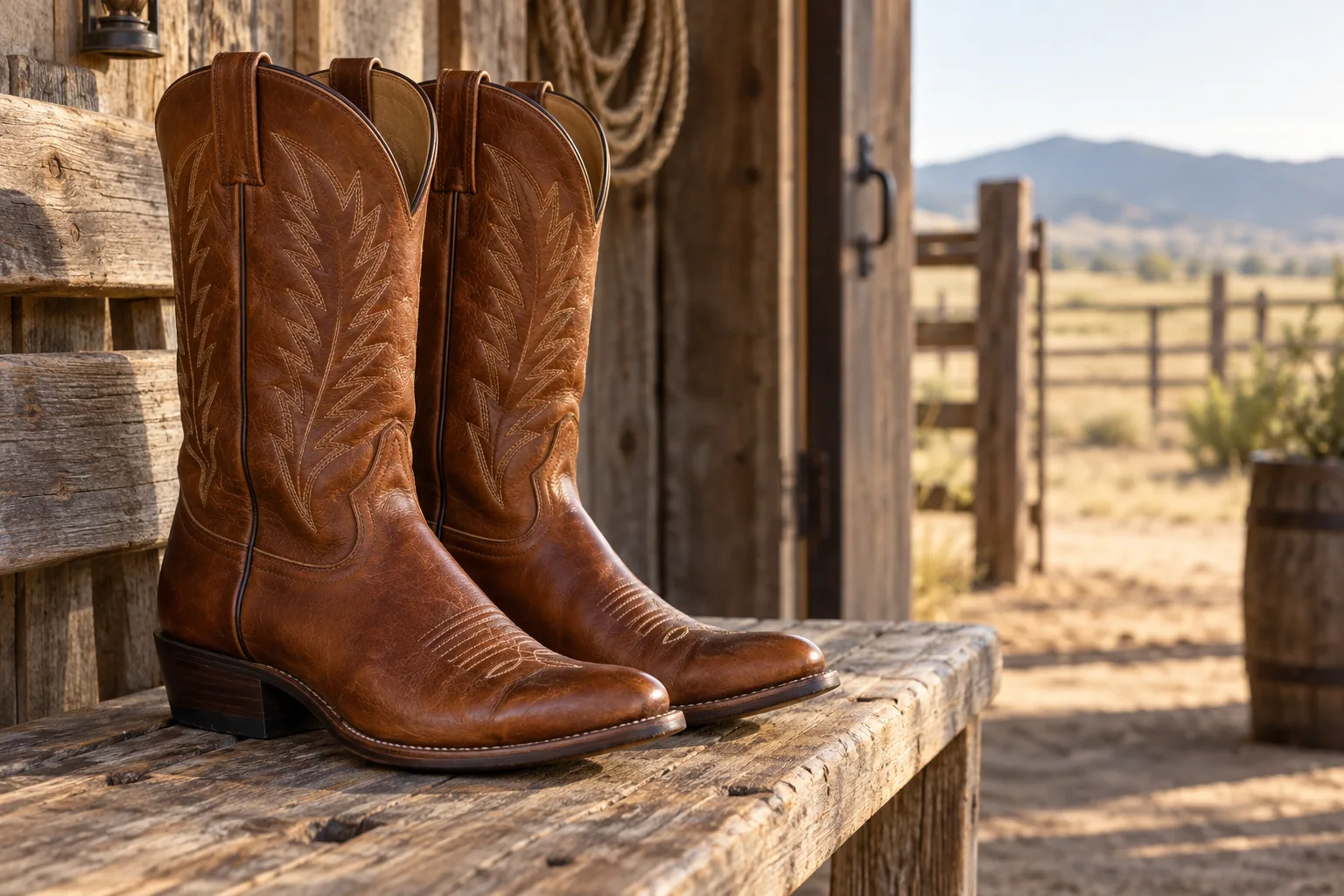 A western boot decision should begin with foot shape, construction, and the work the pair must do.
Start with the use case and toe shape
Western boots can serve daily wear, ranch work, events, travel, or a style-led wardrobe. Those uses call for different levels of protection, flexibility, shaft height, and finishing. Decide where you expect to wear the pair and what you will combine them with. A taller shaft may look right with denim and provide more coverage, while a shorter boot can be easier with different trouser lengths and indoor use.
Toe shape changes both appearance and room. A pointed toe creates a sharper profile but may leave less space for toes that spread naturally. A rounded or broad toe can be more forgiving, though the exact internal shape depends on the last. The visible toe does not prove the interior fit. Use the maker's size guidance and compare the model's measurements with a pair you already wear comfortably.
Understand the construction language
RUJO's official materials describe features including Goodyear welt construction, leather lining, hand-hammered lemonwood pegs, brass nails, replaceable leather outsoles, stacked heels, and a rubber heel cap. These details describe how the boot is assembled and which components may be serviceable. They do not guarantee that every model feels comfortable for every foot or that every future repair will be simple or inexpensive.
A welt can offer a path to resoling because the outsole is attached through a construction designed for service. The condition of the upper, welt, insole, and heel still matters when repair becomes necessary. Ask a local cobbler whether they are willing to work on the specific construction and whether the expected repair cost makes sense for the boot. Construction should inform the purchase, not end the evaluation.
Fit the instep, heel, and shaft
Pull-on boots need a firm entry and a secure fit once the foot is inside. The instep should feel held without sharp pressure. The heel may lift slightly during the initial break-in of a structured boot, but excessive movement can create rubbing and instability. The foot should settle into the heel pocket without sliding forward into the toe. Try the boots with the socks you actually plan to wear.
Shaft fit is separate from foot fit. Check the opening circumference, shaft height, and where the top lands on your lower leg. A narrow shaft may press against the calf, while a wide opening may allow the boot to rotate or catch on clothing. Consider whether you will wear straight, slim, or wider-leg trousers. The best western boot is one that works with the clothes and movement you repeat, not only the outfit in the product photo.
Use the size guide carefully
RUJO's published size guidance should be read alongside your measured foot and the exact model page. Start with the length of your foot, the width you need, and the socks you will use. A familiar dress-shoe size can be a useful reference, but western boot lasts differ and a label cannot describe your instep height or toe preference. If you fall between sizes, examine the current exchange and return process before deciding.
Avoid judging fit from a single short try-on. Walk on a clean surface, flex the foot, sit down, and check the shaft when your leg bends. Look for pressure at the instep, heel slip that does not settle, contact at the toe, or a top edge that cuts into the calf. Keep the boots clean and preserve the packaging until you are confident the return terms still apply.
Compare leather and surface behaviour
The leather or hide determines how the boot looks, feels, and needs to be maintained. Smooth cowhide can develop a visible patina and usually gives a versatile starting point for daily wear. Exotic skins create a distinctive scale or texture and may require more specific care. Finish, colour, and grain variation can make two pairs in the same broad material look different. Read the exact model description instead of assuming a collection-wide rule.
Surface care should match the maker's instructions. Keep leather away from prolonged moisture, allow damp boots to dry naturally, and use only conditioners suitable for the material. Over-conditioning can soften structure or darken a finish. Store boots upright or supported so the shaft does not collapse into sharp creases. Do not use a product intended for one hide on another without checking compatibility.
Assess the sole and heel for your ground
A leather outsole can create a traditional appearance and may be serviceable, while a rubber heel cap can improve grip at the heel. The right balance depends on whether the boot will see polished floors, pavement, dirt, wet ground, or long periods of standing. Look at the tread, heel shape, sole edge, and any stated replacement information. A smooth sole may slide on some surfaces, and a deeper lug may feel less refined indoors.
The heel changes posture and fatigue. A stacked heel can support the western profile, yet height and pitch should fit your walking habits. Examine the heel base and the transition to the sole. If you expect work use, compare the manufacturer's intended use with your ground and safety needs. A style-oriented boot should not be treated as protective equipment unless the maker explicitly describes the relevant protection.
Check the order, exchange, and sale conditions
Boot prices, colours, inventory, and promotional terms change. Before checkout, record the exact model, material, toe, size, width guidance, shipping estimate, warranty, and return or exchange terms. Pay particular attention to sale, promotional, and discount purchases because they may have different refund or store-credit conditions. A lower price does not compensate for a pair that cannot be exchanged when the fit is wrong.
When the boots arrive, inspect the leather, stitching, sole edge, hardware, lining, and both shafts before wearing them outside. Photograph any concern and contact the retailer through the current support channel. Keep the box and packing materials until the decision is final. This is ordinary purchase hygiene for a fitted product, not evidence that a defect exists in any particular pair.
Frequently asked questions
Is a Rujo boot suitable for daily wear?
It can be, depending on the model, fit, leather, sole, and your walking environment. Compare the construction and care requirements with the work the boot will actually do.
Do Rujo boots need a break-in period?
Structured leather footwear may feel different as the upper and footbed settle, but pain, numbness, or concentrated pressure should not be treated as a normal target. Use the exact model guidance and the current return terms.
Can a welted boot be resoled?
A welted construction can make resoling more feasible, but repair depends on the condition of the welt, upper, insole, and heel and on the cobbler's assessment. Ask before assuming a future repair is guaranteed.
What should I check before buying a discounted pair?
Check whether the promotion changes the refund, exchange, or store-credit terms. Confirm the size and material first because a discount can make a wrong-size purchase more difficult to unwind.
Final takeaway
The right Rujo boot is selected through a sequence: define the use, compare the toe and shaft, measure the foot, understand the construction, match the leather and sole to the ground, and verify the current order terms. The official RUJO collection is the source for the model-level details that can change over time.