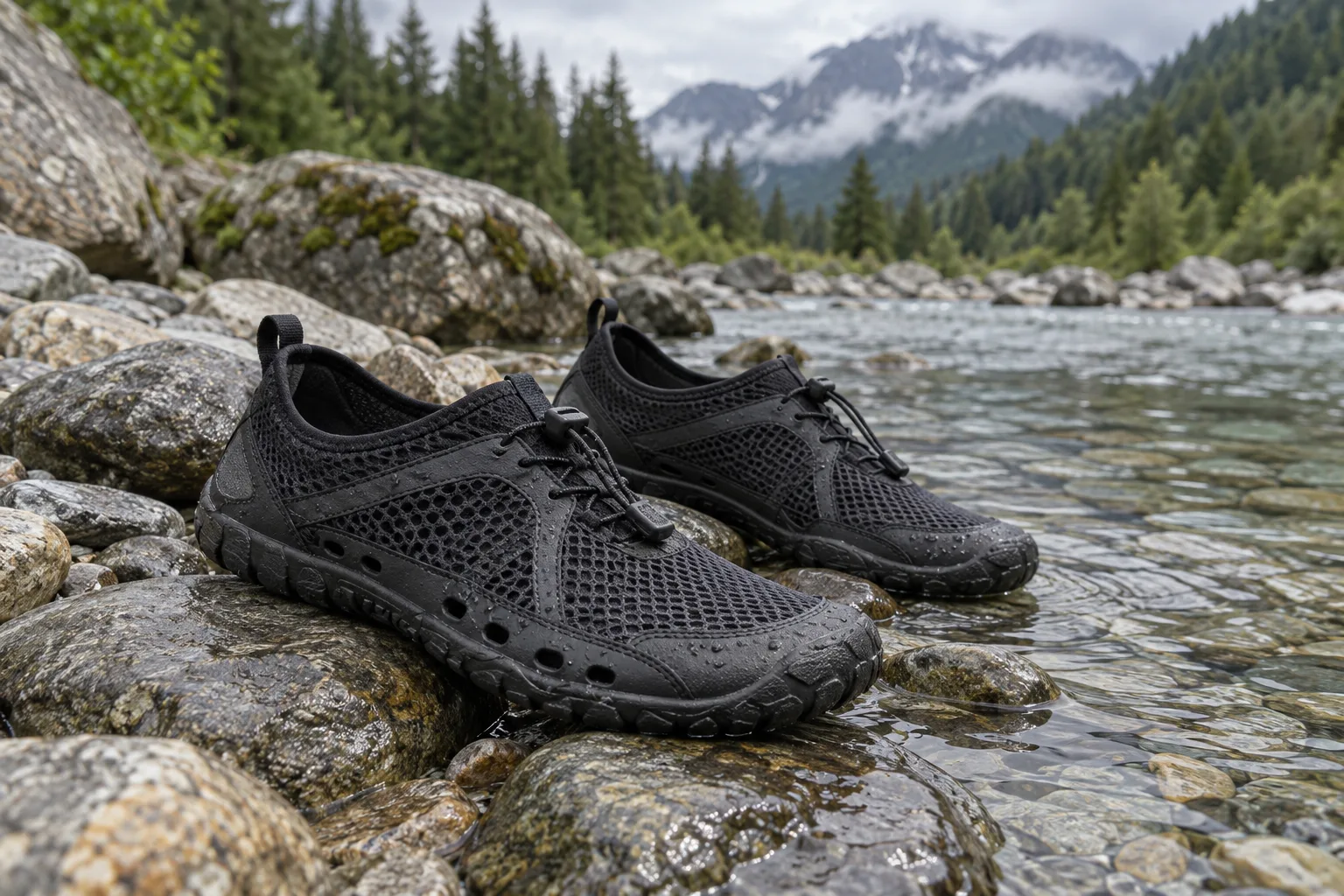
The best men's water shoes should disappear into the activity. They need to stay secure when you step from a boat onto a wet dock, protect your feet from rough surfaces, and let water leave the shoe instead of turning the interior into a soft bucket. Those requirements can conflict. A thick sole may protect better but feel less flexible. A quick-drying mesh upper may drain well while offering little protection from sharp objects. The useful comparison starts with the terrain and the movement you expect.
This guide focuses on the features a shopper can verify before buying: fit, outsole, upper, drainage, closure, protection, drying, and care. Water shoes reduce some equipment problems; they do not make every wet surface safe. For general water-safety planning, the American Red Cross water-safety resources remain a better reference than a product page.
Begin with the water and the ground
Beach walking, paddleboarding, canyon travel, boat use, and pool decks create different demands. Soft sand rewards a flexible, breathable shoe, while a rocky shoreline calls for more underfoot protection and a sole with a dependable contact pattern. A boat shoe may prioritize grip and a low profile. A river shoe may need a secure closure because current and uneven stones can pull at the heel. Start with the surface you will actually encounter instead of treating “water shoe” as one universal category.
Also consider how much walking happens before and after the water. If the shoe will travel from a hotel to a beach, a comfortable footbed and a sole that does not feel awkward on pavement matter. If it will stay beside a kayak, compact drying and easy rinsing may matter more than all-day cushioning. A pair designed for brief pool use can be frustrating on a long approach path, even if both products use the same broad label.
Fit is a security feature
A water shoe should hold the heel and midfoot without creating pressure points. Too much room lets the foot slide when the interior is wet; too little room leaves no allowance for swelling, thicker socks, or a natural spread of the toes. Check the brand's size chart, the shape of the toe box, and whether the upper has stretch. Do not assume that a familiar street-shoe size will transfer across brands or silhouettes.
Try the shoes with the conditions you plan to reproduce. If you will wear neoprene socks, use them during the fit check. Walk, bend the toes, and simulate a step down. The heel should not lift excessively, and the forefoot should not fold against the toes. A shoe that feels slightly loose when dry may become unstable when water reduces friction between foot, sock, and lining. A shoe that feels tight across the top may become uncomfortable once the foot is damp and warm.
Inspect the outsole pattern and compound
The outsole is the main contact surface, so its geometry deserves more attention than a generic “non-slip” phrase. Look for lugs, channels, siping, and a rubber compound suited to the surface. A shallow, flexible pattern can feel good on a smooth deck but may provide limited purchase on loose stones. Deeper lugs can shed sand and mud more effectively, though they can make the shoe feel less natural on hard floors.
Wet traction is conditional. It changes with algae, oil, sand, slope, pressure, and the material of the surface. No outsole eliminates the need to move carefully. Read the maker's description for the intended environment and examine the tread from the side and bottom. A sole that looks substantial but has large smooth areas may not perform like one with a continuous contact pattern. For travel, a balanced tread is often more useful than an extreme lug that feels clumsy away from the water.
Compare uppers by drainage and protection
Mesh and knit uppers can allow water to escape quickly and may feel lighter in heat. They also vary in how much they resist abrasion and how well they hold the foot around the sides. Synthetic overlays can reinforce high-wear zones, while a rubber toe cap may protect against bumps. Each addition changes flexibility and drying time. Look for drainage ports in the sole or a construction that does not trap a large volume of water between layers.
Protection should follow the activity. A thin upper may be perfectly appropriate for a sandy beach and inadequate for a shoreline with shells or broken rock. A structured toe can help with accidental contact but does not turn the shoe into a hiking boot. Check whether seams, overlays, and toe protection are bonded or stitched and whether the interior has rough edges. Comfort matters because irritation can change the way you place each step.
Decide how the closure should behave
Laces provide familiar adjustment but can absorb water and loosen if they are not secured. Bungee systems are fast and convenient, though the range of adjustment varies. Hook-and-loop straps can hold well and make entry easy, but sand can affect the closure. Slip-on designs are convenient for decks and pools, while they may be less secure for current, climbing, or uneven ground.
Choose the closure by the movement, not by speed alone. A shoe for paddleboarding or river walking should remain attached when you lift the foot, crouch, or step over a submerged obstacle. Keep excess lace or toggles from catching on equipment. Check whether the tongue stays centered and whether the heel counter collapses when you put the shoe on. Those small construction details often decide whether the fit remains stable after repeated wet use.
Cushioning, flexibility, and protection must balance
A water shoe can have a thin flexible sole, a more cushioned midsole, or a hybrid construction. Thin soles improve ground feel and packability. Cushioned soles can make a longer approach or hard deck more comfortable. Protection rises with thickness and structure, though a rigid platform may reduce the foot's ability to adapt to uneven ground. The best choice depends on the duration and surface of the activity.
Check the bend point by looking at the sole and by flexing the shoe gently. The shoe should bend where your foot bends unless the design intentionally provides a stiffer platform. A very soft upper with a heavy sole can feel disconnected. A shoe that twists freely in every direction may be comfortable but offer limited lateral support. Avoid deciding from weight alone; a lightweight shoe can still have a useful protective toe and a stable heel.
Drying and care affect ownership
Rinse sand, salt, and mud from the shoe after use. Follow the manufacturer's instructions for washing, drying, and removing the insole. Direct high heat can damage adhesives, deform foam, or change the fit, so air-dry the pair in a ventilated place unless the care label says otherwise. Remove the insole when allowed and open the closure so air can reach the interior. A shoe that dries slowly can develop persistent odor and may be unpleasant on the next outing.
Look for replacement insoles, durable mesh, and a construction that can be rinsed without trapping debris. Check whether the upper has a coating that should not be exposed to certain cleaners. Store the shoes fully dry and do not leave them sealed in a wet bag. Care is especially important when the shoes are used in salt water, because residue can stiffen fabric and affect hardware.
A short buying checklist
Before choosing, record the intended terrain, time spent walking, toe protection, outsole pattern, drainage, heel security, closure, size-chart measurements, footbed feel, flexibility, drying routine, and return terms. Compare the shoe while thinking about your actual gear: socks, fins, a paddleboard, a boat deck, or a backpack. Product photographs can show the pattern and shape, but they cannot confirm how the shoe will feel on your foot.
The best men's water shoes are the pair whose compromises match the trip. Choose fit and retention for movement, drainage for repeated wet use, protection for the surface, and tread for the ground you will meet. When those basics are correct, color and packability become useful tie-breakers instead of distractions.
Common questions
Can water shoes replace hiking shoes?
Usually not. Water shoes prioritize drainage, flexibility, and wet environments. A hike with heavy loads, sharp rock, cold conditions, or extended elevation may require footwear with different support and protection.
Should water shoes feel tight?
They should feel secure without compressing the toes or creating hot spots. The correct fit depends on the upper, closure, socks, and intended movement. Check the maker's measurements and test heel retention.
Do water shoes need socks?
Some people wear them without socks, while others use thin or neoprene socks for comfort and temperature. Fit the shoes with the layer you expect to use and follow the product guidance.


