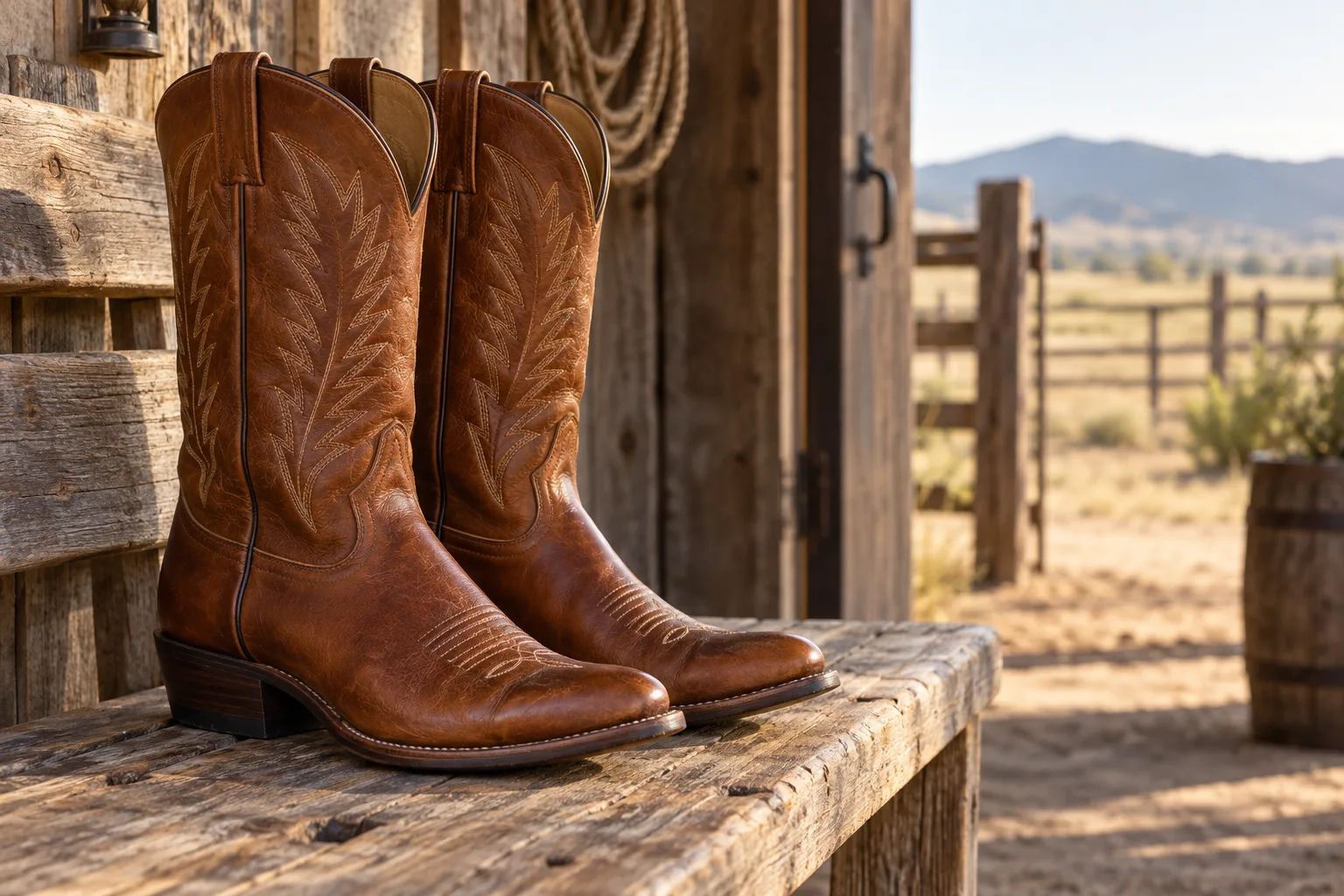
Shell cordovan is one of the most prized leathers in footwear. It has a deep shine, rolls instead of creasing, and is known for durability. It is also expensive and scarce. This guide explains what shell cordovan is, how boots made from it are usually built, and how to decide if a pair is worth it for you.
What shell cordovan is
Shell cordovan comes from a dense membrane under the hide on the rear of a horse. Each animal yields only two small "shells", which is one reason it is costly. The best-known US tannery is Horween in Chicago, which tans shell cordovan over a long process of several months.
Because it is a dense membrane rather than a grain layer, shell cordovan behaves differently from cowhide:
- It forms soft rolls or ripples where the boot flexes, instead of sharp creases.
- It has a natural shine that can be revived by buffing.
- It resists scuffs well, though it can show water spots.
How the boots are built
Most shell cordovan boots are Goodyear welted. The upper is stitched to a welt, and the sole is stitched to the welt, which allows resoling. Inside you will often find:
- a leather insole,
- a cork filler that molds to your foot,
- a shank under the arch for support.
Ask the maker about construction if the listing is unclear. A good leather and a cemented build is not a typical combination at this price, but it is worth confirming.
Sizing and fit
Boots are made on lasts that vary by maker and model. Many heritage boot makers suggest sizing down from your sneaker size, but this varies.
- Use the maker's size guide and Brannock measurements if provided.
- Expect a firm fit at first; leather and cork will adjust.
- Heel slip is common initially in welted boots and usually decreases with wear.
Shell cordovan does not stretch as much as calfskin, so getting the width right matters.
Soles and climate
- Leather soles are classic but slippery when new and less suited to wet streets.
- Rubber soles such as commando or crepe give better grip and wear well.
- Dainite-style studded soles balance a sleek look with grip.
Choose based on where you walk most.
Caring for shell cordovan
- Use cedar shoe trees after each wear.
- Brush with a horsehair brush to bring up the shine.
- Condition sparingly; shell cordovan needs less conditioner than calfskin.
- Wipe off water spots promptly and let the boots dry naturally.
- Use a deer bone or smooth tool, if you like, to smooth out bumps.
Avoid heavy creams with lots of pigment, which can build up on the surface.
Is it worth the price?
Shell cordovan boots usually cost much more than calfskin pairs. They can make sense if:
- you plan to wear the boots for many years and resole them,
- you like low-maintenance shine,
- you value the look of rolled creases.
If you need a boot for heavy outdoor use, a sturdy calfskin or roughout boot may serve better at a lower cost.
Quick checklist
- Confirm the leather is genuine shell cordovan and from which tannery.
- Check the construction method.
- Measure your feet and read the maker's sizing advice.
- Choose a sole for your climate.
- Budget for shoe trees and a horsehair brush.
- Read return and resoling policies.
FAQ
Does shell cordovan crease? It rolls rather than forming sharp creases, which many owners like.
Is shell cordovan waterproof? No. It resists light moisture but can show water spots. Wipe it dry and let it rest.
How often should I condition it? Less often than calfskin. Many owners condition only a few times a year and rely on brushing between.