Shopping for a silk pillowcase and sheets set requires more than choosing a color and reading a thread-count claim. The first question is what the product is made from. Silk is a fiber; satin describes a weave or surface construction that can be made from several fibers. A smooth, glossy product may be silk, polyester satin, or a blend. Read the fiber disclosure, care instructions, dimensions, and return terms before treating the photograph as evidence.
This guide explains how to compare silk bedding by fiber, weave, weight, size, closure, temperature, care, and realistic use. It does not claim that silk bedding produces a medical or cosmetic result for every sleeper. Confirm the current product page and manufacturer instructions before ordering.
This article contains affiliate links. If you use one and complete an eligible purchase, Last Meadow Guide may earn a commission at no extra cost to you. Retailers control current price, stock, dimensions, and policies.
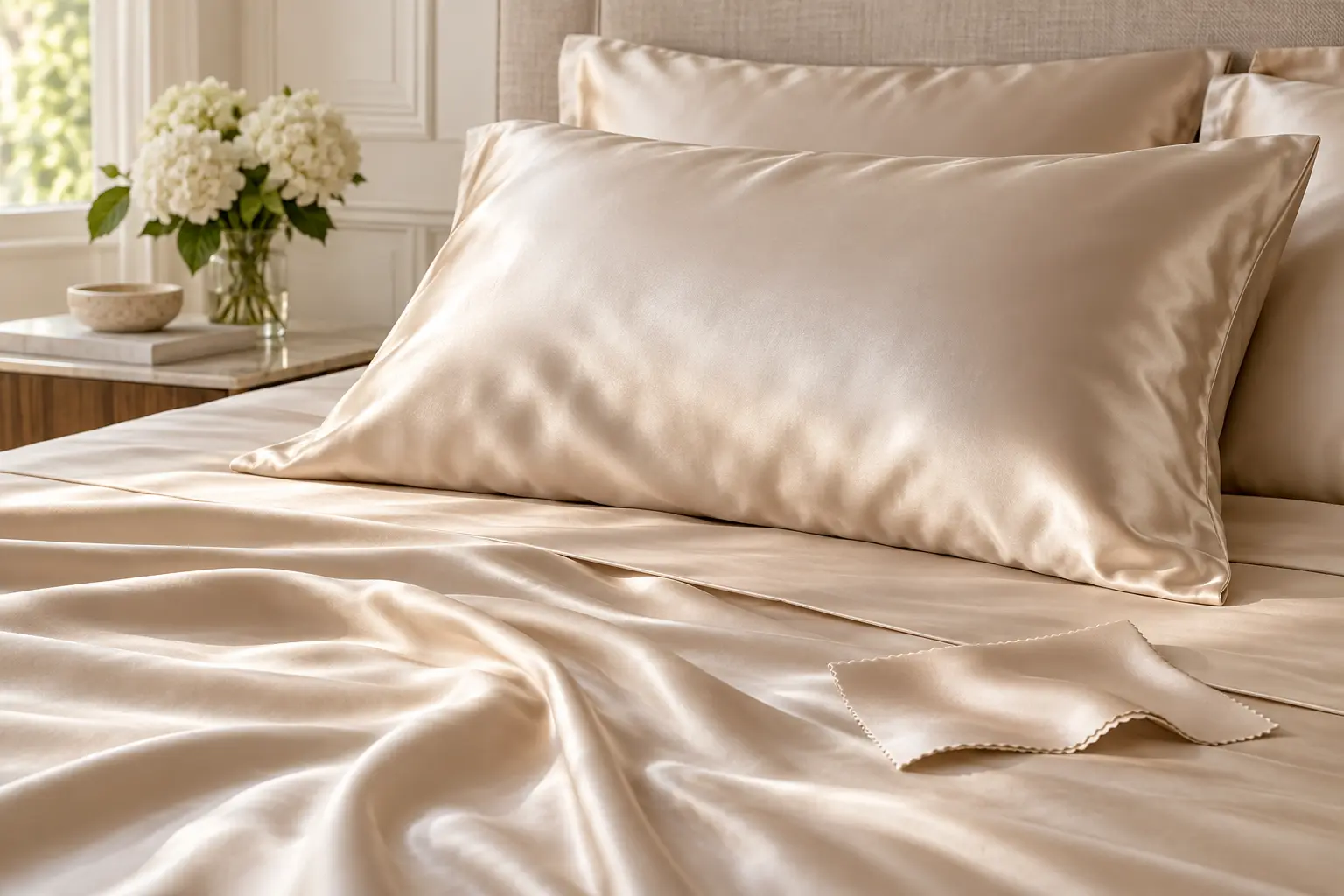
Silk pillowcase and sheets: the short answer
The most useful purchase begins by separating the pillowcase decision from the sheet-set decision. A pillowcase has a smaller surface, a different friction pattern, and a simpler wash load. Sheets determine how much of the body touches the fabric, how the set behaves on the mattress, and how often the larger pieces need cleaning. Buying one pillowcase to evaluate the hand and care routine can be more practical than committing to a complete set immediately.
Silk can feel smooth and lightweight, though the experience depends on fiber, weave, finish, weight, and temperature. The word “silk” does not specify the exact construction. A high-quality listing should state the fiber content and provide finished dimensions. If the page relies on vague phrases such as “silky” or “silk touch” without a fiber statement, treat the material as unresolved.
Verify the fiber before comparing shine
Read the composition line and look for the percentage of silk. Silk blends can have different durability, cost, drape, and care requirements from pure silk. Satin polyester can create a smooth surface at a different price and with a different washing routine. Neither surface is automatically suitable for every sleeper; the decision depends on the feel, temperature, care, and appearance you want.
The FTC’s textile and wool labeling guidance explains why fiber content should be disclosed for covered textile products. Use the garment or bedding label and full product description as the primary reference. A photograph cannot reveal the fiber percentage, and a high thread-count number cannot substitute for a clear material statement.
Compare weave, weight, and surface feel
Silk bedding can use different weaves and finishes, changing how the surface reflects light and moves over the bed. A smooth, tightly constructed fabric may feel sleek and slide more easily. A textured or heavier construction can feel more substantial and may stay in place differently. Ask what the product is intended to do and read any weight or momme information supplied by the maker. A number has value only when the unit and construction are clear.
Heavier fabric is not automatically cooler, stronger, or better. Thermal comfort depends on the sleeper, room, insert, weave, and layers underneath. If you sleep hot, assess the entire bedding system rather than expecting the cover alone to solve temperature. If you move often, consider whether a slippery surface will cause the sheet to shift or the pillow to escape the case.
Measure the mattress and pillows exactly
Sheet dimensions should match the mattress, including depth. Measure the mattress height and account for any topper or pad. A fitted sheet that is too shallow may pull off at the corners; one that is excessively deep can bunch and loosen. Check the maker’s finished dimensions rather than assuming that “queen” or “king” means identical sizing across brands.
Pillowcase dimensions should be compared with the pillow insert, not only the bed size. A case that is too tight can stress the closure and flatten the pillow. A case that is too large can create loose fabric and more movement. Envelope closures, zippers, and open-end cases each change the feel and the ease of putting the pillow inside. Check whether the closure touches the face or neck during sleep.
Check fitted-sheet construction
Look at elastic placement, corner depth, and any labels that indicate the head or foot. Full-perimeter elastic can hold the sheet more consistently, while corner elastic may be easier to put on. The exact result depends on mattress height and movement. If the listing includes a pocket-depth range, compare it with your measured mattress rather than assuming extra fabric will be harmless.
Flat sheets add a layer between the sleeper and the duvet or blanket, but they also add wash volume and another edge to tuck. Some sleepers prefer the simpler routine of a fitted sheet and duvet cover; others want the additional layer. Choose the set around your laundry schedule and room temperature. More pieces create more flexibility only when you will use them.
Plan the care routine before buying
Silk care varies by product. Follow the exact label for water temperature, detergent, agitation, drying, and pressing. The FTC’s care-labeling information explains the role of regular care instructions, while the product label controls the item in your home. Do not assume every silk sheet can be machine washed or that every detergent is suitable.
Frequent washing is part of bedding ownership. Check whether the set requires a delicate cycle, mesh bag, air drying, or professional care. Consider the size of your washer and the drying space available. Large sheets can be damaged by an overloaded machine or excessive heat. If the care routine is too demanding for your household, a single silk pillowcase or a silk-blend alternative may be a more realistic purchase.
Consider friction, slip, and night movement
The smooth surface that attracts many shoppers can also create movement. A pillowcase may slide on a pillow or shift inside a loose case. A fitted sheet can pull at the corners if the mattress surface and sheet finish do not cooperate. Look for elastic details, closure design, and customer photographs of the product on an actual bed. A smooth hand is only useful when the bedding stays positioned.
Avoid making broad health or beauty promises from a texture description. A pillowcase changes the surface against the hair and face, but results vary with hair type, skin, sleep position, products, and washing. Choose the fabric because you prefer its feel and care profile. Keep expectations tied to observable properties such as fiber, dimensions, surface, and maintenance.
Choose color and finish with maintenance in mind
Light colors can show cosmetics, hair products, and body oils quickly. Dark colors may reveal lint, fading, or detergent residue. Prints can disguise small marks while making the set harder to coordinate. Ask how often you will wash the pieces and whether you have enough time for the color to be treated carefully. Bedding should work with the care you can provide, not an idealized laundry routine.
Gloss changes under bedroom lighting. Request a swatch where available or inspect photos taken in more than one light. Confirm whether the fitted sheet, flat sheet, and pillowcases share the same fiber and finish; a set may combine different constructions. Read every component description rather than assuming the headline applies identically to all pieces.
Inspect packaging, returns, and authenticity details
Before opening, save the product page, fiber statement, dimensions, care instructions, and order confirmation. Check whether bedding is final sale, whether opened packaging affects returns, and how a defect should be documented. Inspect seams, elastic, closures, and the surface before laundering. Do not wash a product until you have confirmed the size and construction are correct.
If a listing uses a brand name or certification claim, verify the claim on the brand’s current page. Avoid relying on a badge shown only in a marketplace image. Product names change, and marketplace sellers can offer different specifications under similar titles. The material statement and manufacturer information provide the strongest basis for comparison.
Final checklist
Before buying a silk pillowcase and sheets, confirm fiber percentage, weave or construction, weight information, pillowcase dimensions, mattress depth, fitted-sheet elastic, closures, care method, color, component materials, packaging, delivery, and returns. Decide whether you need a complete set or whether starting with one pillowcase makes more sense. Keep a spare bedding option while learning the care routine.
The best silk bedding purchase matches the fiber and feel you want with a realistic wash and storage plan. Measure the bed, inspect the construction, and treat “silky” language as a prompt to read further. A clear product specification is more useful than a glossy photograph or a single thread-count claim.
Frequently asked questions
Is satin the same as silk?
No. Silk is a fiber, while satin describes a weave or finish that can be made from several fibers. Read the fiber statement before comparing products.
Should I buy a silk pillowcase before silk sheets?
That can be a practical way to assess the surface, temperature, slip, and care routine with a smaller wash load and lower commitment.
How do I stop silk sheets from slipping?
Start with correct mattress depth and fitted-sheet dimensions. Check elastic construction and use only the methods allowed by the manufacturer; avoid improvised fasteners that can damage the fabric.
Can silk bedding go in a regular washer?
Some products allow delicate machine washing and others require different care. Follow the exact label for the item rather than applying a general rule to all silk.
Final verdict
A silk pillowcase and sheets purchase should be based on fiber disclosure, dimensions, surface behavior, and care capacity. Compare the pillowcase and sheet set as related but separate decisions. Choose the construction that fits your room temperature and sleep movement, then verify the current product details before checkout.