A plush accent chair is the seat you sink into with a book, a coffee, or a blanket at the end of the day. It also adds softness and color to a room. But plush can mean many things: a deep seat, a thick cushion, a cuddly fabric, or all three. This guide explains what makes an accent chair feel plush, how to keep that comfort from flattening out, and what to check before you buy.
What "plush" really means in a chair
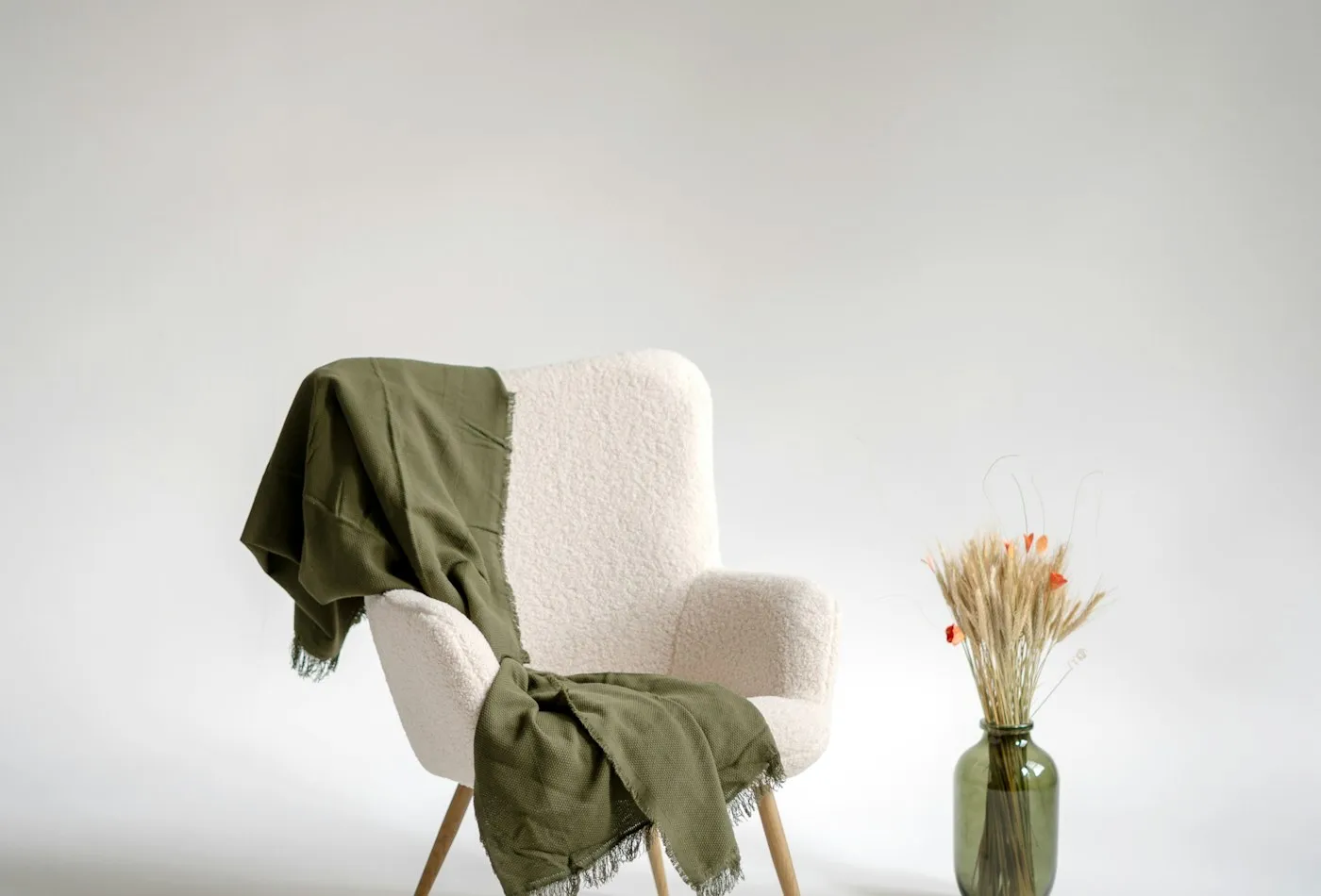
When people say an accent chair feels plush, they usually mean three things working together:
- A soft top layer that gives a little when you sit down.
- Enough depth and recline to lean back and relax.
- A tactile fabric such as boucle, velvet, chenille, or faux shearling.
A chair can look plush in photos but feel firm in person if the cushion is a single block of dense foam. The reverse can happen too: a very soft chair can feel unsupportive if the frame and core are weak. The best plush chairs combine a supportive core with a soft surface.
Size and proportions that feel comfortable
Seat height, seat depth, and arm height decide how a chair feels more than its style does.
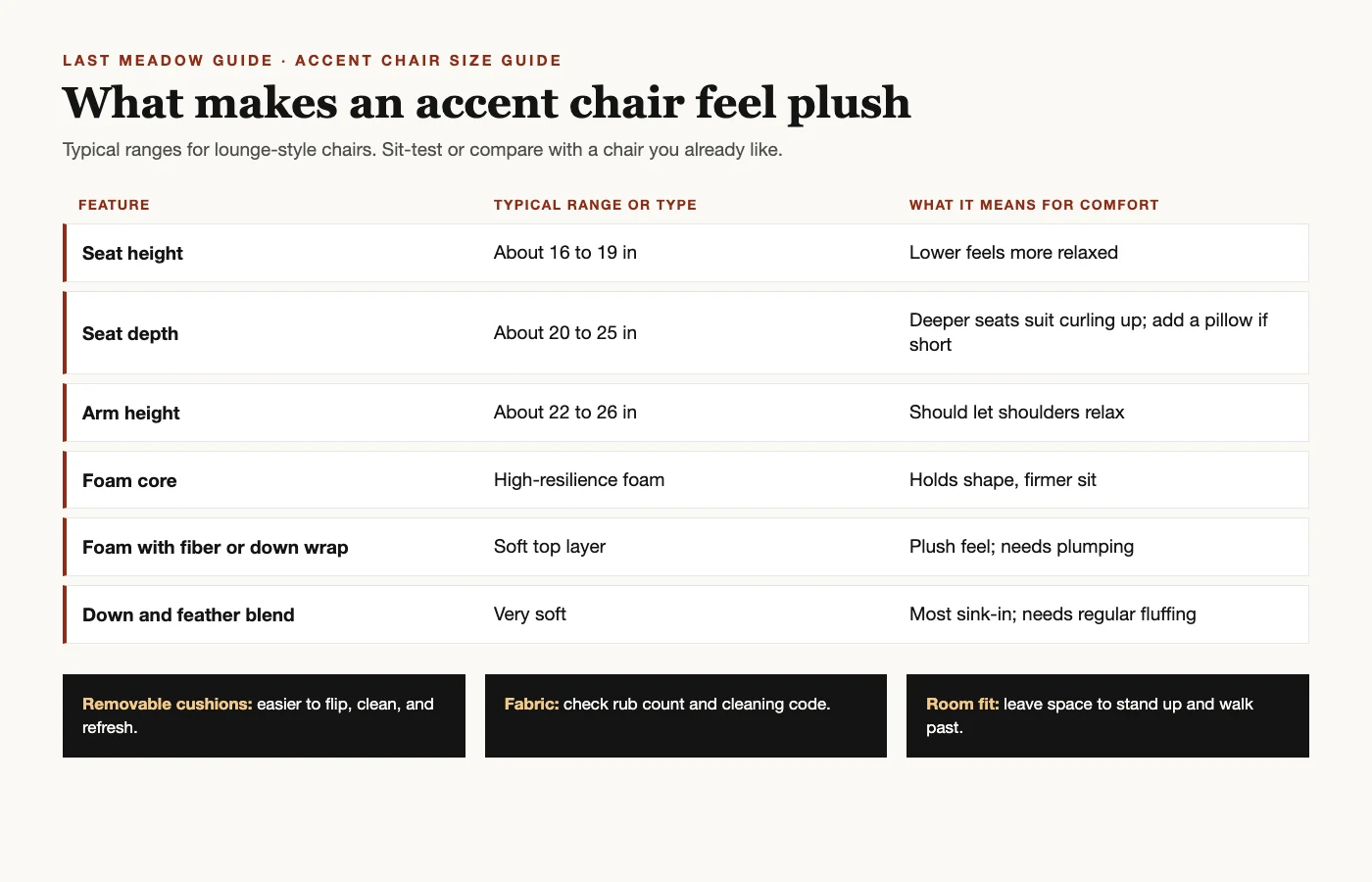
Seat height. Lounge chairs often sit a little lower than dining chairs, around 16 to 19 inches. Lower seats feel more relaxed, but they can be harder to get out of, especially for older family members.
Seat depth. Deeper seats, around 22 inches or more, let you curl up or sit cross-legged. If you are shorter, a very deep seat can leave your feet dangling; a lumbar pillow or ottoman helps.
Arm height and width. Arms that let your shoulders relax feel best. Wide, padded arms add to the plush feel and give you somewhere to rest a book.
Compare the listed dimensions with a chair or sofa you already find comfortable at home. That is more reliable than a description.
Cushion fills: what stays soft
The cushion fill is the biggest factor in long-term comfort.
High-resilience foam holds its shape and gives a supportive, slightly firm sit. On its own, it can feel less cozy, but it stays neat.
Foam wrapped in fiber or down combines a supportive core with a soft top layer. This is the most common recipe for a plush chair that still holds up. Expect to plump the cushion now and then.
Down and feather blends feel the softest and most sink-in. They need regular fluffing and can look rumpled, which some people love for a relaxed look.
Pocket springs in some seats add bounce and help cushions recover.
Ask what the cushion is made of and whether it is removable and reversible. Flipping cushions keeps wear even.
Fabrics that feel plush
Boucle. Nubby, looped, and very tactile. It has a soft, cloud-like look and hides small marks, but loops can snag on pet claws or jewelry.
Velvet. Dense pile with a soft sheen. Polyester velvet is durable and often easy to clean. It shows pressure marks, which brushing usually fixes. If you prefer leather, see our leather lounge chair guide.
Chenille. Soft and slightly fuzzy, with a warm feel. Quality varies; tightly woven chenille resists pilling better.
Faux shearling and teddy fabrics. Very cozy and on trend. They can mat over time, so gentle brushing helps.
Performance fabrics. Many brands now make soft-hand performance fabrics that resist stains, a good choice for homes with kids or pets.
Check the cleaning code before you buy: W means water-based cleaners are safe, S means solvent only, WS means either, and X means vacuum only.
Frame and build quality
A plush chair still needs a solid frame. Look for kiln-dried hardwood or engineered wood, joints that are glued and screwed or doweled, and a seat that does not creak or rock when you shift your weight.
Swivel bases are popular on rounded plush chairs. Check that the swivel feels smooth and stable, and ask about the weight capacity.
If the chair has exposed legs, check how they attach. Screw-in legs should seat firmly; if they wobble, a mounting plate may be loose.
Style and shape
Barrel and tub chairs wrap around you with curved backs and feel snug.
Wingback chairs add height and head support, good for reading.
Club chairs are low and wide with thick arms, a classic plush look.
Armless slipper chairs fit small spaces but feel less enclosing.
Rounded, sculptural chairs in boucle are popular now. They look striking but can be less practical for sitting upright at length. Try to sit in one, or read reviews about comfort over long periods.
Placing a plush accent chair
Give the chair room to breathe. Leave enough space to stand up comfortably and walk past, often around 30 inches for main paths.
Good spots include a corner next to a window, beside a fireplace, angled toward the sofa in a living room, or in a bedroom reading nook. Add a small side table and a floor lamp to make it a real place to sit.
A plush chair looks especially inviting with a throw and one pillow. Keep accessories simple so the chair's texture stands out.
Caring for a plush chair
- Vacuum weekly with an upholstery brush.
- Plump fiber or down cushions regularly.
- Rotate and flip cushions when possible.
- Blot spills right away and follow the cleaning code.
- Brush boucle and faux shearling gently to lift matted areas.
- Keep the chair away from strong sun to prevent fading.
Budget and value
Lower-priced plush chairs often use lower-density foam that flattens within a year or two, and softer frames. Mid-range chairs use better foam cores with soft wraps and more durable fabrics. Higher-end chairs add down blends, solid hardwood frames, and custom upholstery.
Compare warranties for the frame and cushions. A replaceable cushion insert can extend the life of a chair you love.
Plush accent chairs with ottomans and pairs
Adding an ottoman turns a plush accent chair into a place to stretch out. Choose one roughly the same height as the seat, or slightly lower, and a depth that supports your calves. A matching ottoman looks tidy; a contrasting leather or woven pouf adds texture.
Two plush chairs facing a sofa create a classic conversation layout. If you buy a pair, order them at the same time so fabric dye lots match. For a relaxed look, pair one plush chair with a different style, such as a wood-frame chair, and repeat a color between them.
Colors that keep a plush chair looking good
Cream and ivory boucle look soft and light but show marks faster. Oatmeal, taupe, and warm grey hide everyday use better while keeping the cozy look.
Deep colors such as forest green, rust, and navy look rich in velvet and chenille and hide stains well. If you have pets, choose a color close to their fur so hair is less visible between cleanings.
Order a swatch and look at it in daylight and lamplight. Textured fabrics such as boucle and velvet change appearance more than flat weaves as light moves across them.
Plush accent chair FAQ
What makes a chair feel plush but not saggy? A supportive foam core with a soft fiber or down wrap. Pure down feels softest but needs regular fluffing.
Is boucle comfortable for everyday use? Yes, many people find it very cozy. Choose a tightly looped boucle if you have pets.
How deep should a plush chair be? Around 22 inches or more feels lounge-like. Shorter people may prefer a slightly shallower seat or a lumbar pillow.
Can a plush chair work in a small room? Yes. Choose a compact barrel or slipper chair with raised legs so it looks lighter.
Final checklist
- Compare seat height, depth, and arm height with a chair you like.
- Ask about the cushion core and wrap.
- Choose a fabric that suits your household and check the cleaning code.
- Check the frame, joinery, and swivel mechanism if there is one.
- Measure the space and leave room to move around the chair.
- Read the return policy, since comfort is personal.
For more seating ideas, see our guide to ergonomic task chairs.