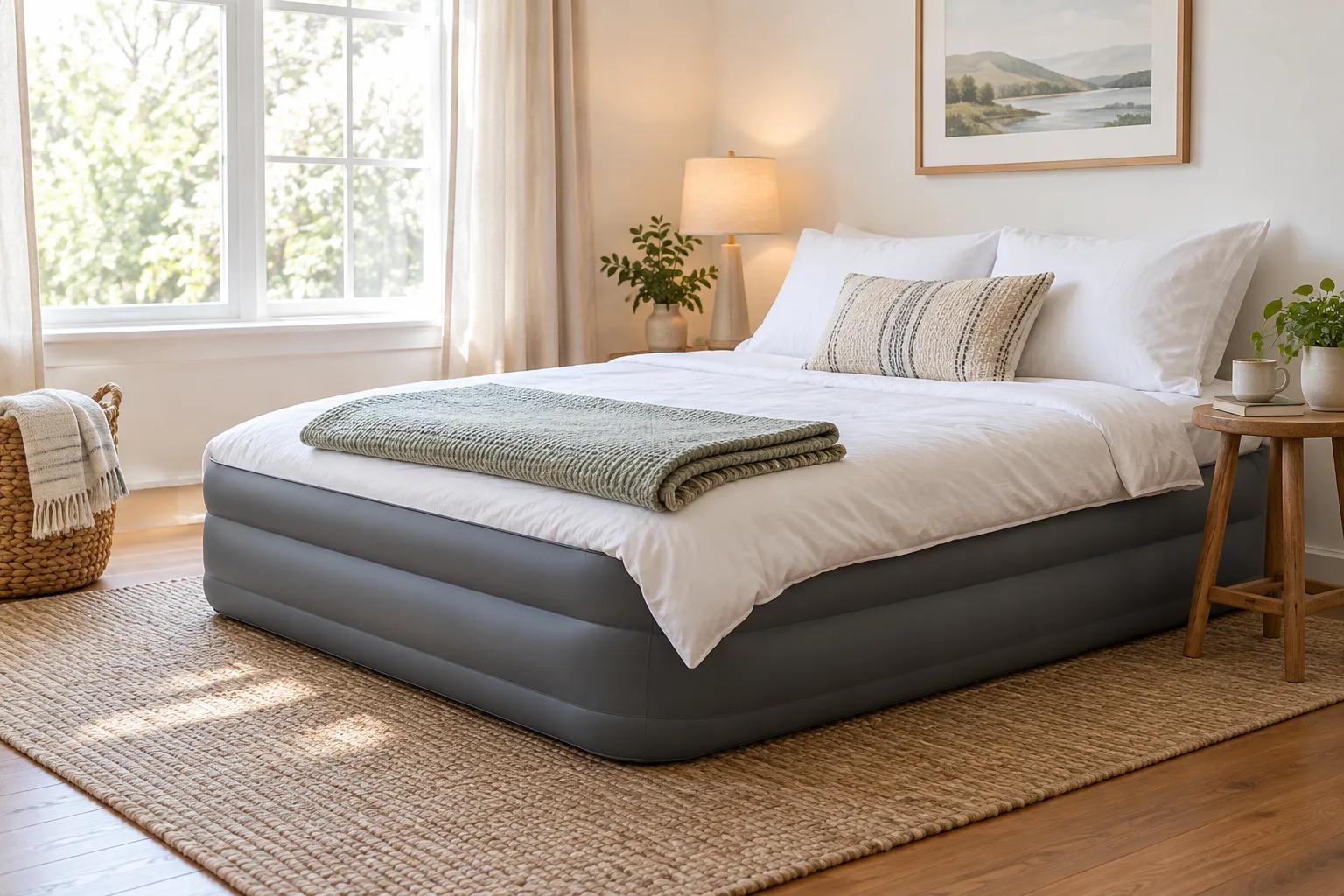
An air mattress bed can turn a spare room, living room, or campsite into a temporary sleeping space without the bulk of a conventional bed. Its value comes from flexibility. It can be stored between visits, moved through a doorway, and inflated when a guest arrives. The trade-off is that comfort and reliability depend on setup, temperature, floor conditions, and the design of the air chamber. The tallest model is not automatically the most comfortable, and the cheapest model is not automatically the easiest to store.
Use this guide to compare height, dimensions, top surface, pump, firmness control, edge support, noise, puncture risk, and storage. The U.S. Consumer Product Safety Commission's safety resources are a useful general reference for household products; the exact inflation, weight, and use instructions belong to the current manufacturer's manual.
Decide who will sleep on it
Start with the sleeper rather than the advertised size. A child, a single adult, two adults, and an older guest place different demands on the bed. Height affects how easily someone can get up. Width affects whether two people can turn without disturbing each other. Weight distribution affects sag and edge pressure. If the bed is for occasional guests, record the largest and tallest person it may need to accommodate, then compare the manufacturer's dimensions and limits.
The sleeping position also matters. Side sleepers often notice pressure at the shoulder and hip sooner than back sleepers. A firm surface can feel supportive to one person and unforgiving to another. The bed should provide a stable base without being inflated beyond the maker's guidance. Treat comfort descriptions as starting points, because firmness is influenced by body weight, room temperature, bedding, and personal preference.
Choose height for access and storage
Low air beds are usually easier to pack and can suit camping or floor-level use. Raised designs create a more bed-like entry height and may be easier for guests who do not want to lower themselves to the floor. Height also changes stability, stair handling, and the amount of air required. Measure the packed size and the inflated height together. A tall bed can be helpful in a guest room and inconvenient in a small storage closet.
Check the distance from the top surface to nearby furniture, radiators, outlets, and walls. Leave enough space to walk around the bed and to reach the pump or valve. In a tight room, the inflated footprint can be more important than the nominal mattress size because bedding and movement need additional clearance. Mark the full outline on the floor before the first setup if the room is close to its limit.
Measure the sleeping surface, not only the label
Twin, full, queen, and other size names provide a useful shorthand, though dimensions vary by product. Record the exact length, width, and height. Check whether the top has rounded corners or a built-in pillow area that reduces the flat sleeping surface. A mattress may fit a standard sheet poorly if its shape or height differs from a conventional model.
Measure doorways, stair turns, and the path from storage to the setup area. A bed that inflates in the guest room can still be difficult to carry there in its bag. If you plan to use a fitted sheet, compare the sheet's pocket depth with the inflated mattress height. Bedding that slips can create discomfort and make the surface feel less stable.
Compare the air chamber and edge behavior
Internal chambers, coils, and beams determine how the surface distributes weight. Different constructions create different sensations when one person moves. A broad, unsupported middle can feel less stable, while a more structured design may limit the feeling of rolling toward an edge. Look for the manufacturer's explanation of chamber layout and maximum load. Marketing language about “support” is less useful without the construction details behind it.
The edge is important when getting in, sitting to dress, or sharing the bed. A soft edge can compress under weight. A reinforced edge may feel more secure but can change the sleeping area. Test the edge without bouncing or exceeding the instructions. The mattress should sit on a clean, level surface with no sharp objects, rough seams, or heat sources beneath it. A rug or protective layer can help, but it should not hide a floor problem.
Treat the pump as part of the bed
Some air beds include an integrated electric pump; others require a separate pump or use a manual valve. An integrated pump can simplify setup and deflation, but it needs a reachable outlet and creates operating noise. A separate pump may be easier to replace or use away from power, though it adds another item to carry. Read the inflation and deflation instructions before judging convenience.
Check how the pump connects, where the valve is located, and whether the bed can be topped up without fully deflating. A bed that needs repeated manual handling may be frustrating for frequent guests. Listen to the pump in the room where it will be used if possible. A short inflation cycle can still feel loud in a small bedroom at night. Keep cords clear of walking paths and use only the power method specified by the maker.
Plan firmness and overnight changes
Air pressure changes with temperature and use. A mattress that feels firm when first inflated may feel different after a night, especially in a cool room. Leave enough room to adjust the firmness without stretching the material. Do not use a compressor or continue inflating after the bed reaches the maker's stated level. Overinflation can stress seams and change the intended surface.
If two people will share the bed, pay attention to movement transfer and the tendency to roll toward the center or edge. Use the correct bedding and avoid placing heavy furniture against the side to stop movement. A headboard is not automatically compatible with an air bed. The goal is a stable sleeping surface that remains clear of pinch points and sharp contact.
Protect the surface and control moisture
Inspect the room before inflation. Remove grit, toys, pet items, staples, and anything with a sharp edge. Keep the bed away from heaters, hot pipes, and direct heat sources. Use a thin protective layer that cannot bunch beneath the mattress. Do not drag an inflated bed across the floor if the instructions warn against it. Small punctures can be difficult to find once the bed is packed away.
Bedding creates a buffer between the sleeper and the surface, though it also traps warmth and moisture. Air the bed after use and wipe it according to the care instructions. Allow the surface to dry fully before folding. If a leak is suspected, follow the maker's repair guidance and use the correct patch material. A generic adhesive may not bond properly or may damage the surface.
Deflation and storage decide repeat use
Deflation is part of the product experience. A good system lets air leave efficiently, folds into a manageable shape, and stores without forcing sharp creases into the material. Clear the area before opening the valve. Keep the pump, cable, repair kit, and instructions together. Label the bag if the household has more than one mattress or bedding set.
Store the bed dry in a cool place away from direct sunlight, pests, and heavy objects. Do not compress it under a pile that could crease valves or seams. Check the bed occasionally if it is stored for a long period, especially before an arrival or trip. A short inspection and inflation test can expose a problem while there is still time to repair or replace it.
The air mattress bed checklist
Before buying, compare sleeper size, inflated dimensions, height, packed dimensions, chamber structure, edge support, surface texture, pump type, inflation time, deflation method, weight guidance, power needs, repair kit, care instructions, warranty, and return terms. Then measure the room and the storage route. These details tell you whether the bed will work in the space you have, not only whether the listing sounds comfortable.
The right air mattress bed is a temporary sleep system that can be set up, adjusted, cleaned, deflated, and stored without turning every guest visit into a project. Choose the size for the sleeper, the height for access, the pump for the room, and the surface for your care routine. A realistic setup plan matters more than a long list of decorative features.
Common questions
How long can an air bed stay inflated?
Follow the manufacturer's instructions. Continuous inflation can put different stress on seams and valves than occasional use, and room conditions can change the pressure. Inspect it and top up only as directed.
Why does an air bed feel softer overnight?
Temperature, body weight, small pressure changes, and the material settling can all affect the sensation. Check for leaks and follow the maker's firmness and inflation guidance before adding more air.
Can regular sheets fit an air mattress bed?
Sometimes. Measure the inflated height and compare it with the sheet's pocket depth. Rounded corners, pillow sections, and unusual dimensions can make a standard fitted sheet slip.


